
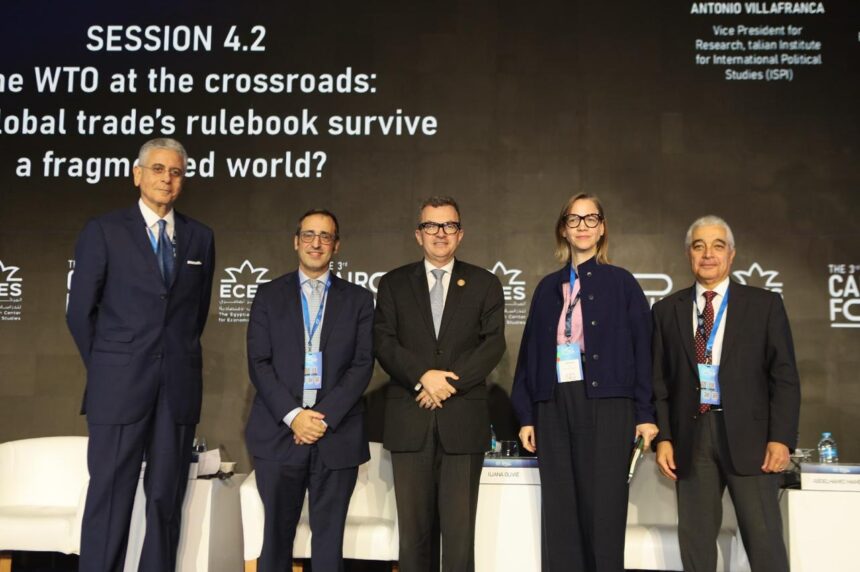
Ahmed Rostom, Minister of Planning and Economic Development, said Egypt is working simultaneously to simplify domestic procedures and strengthen its international negotiating and legal capabilities to help shape more development-oriented trade rules.
These efforts aim to enable Egyptian businesses to benefit from such rules, improve their competitiveness and access international markets, while supporting the stability of regional supply chains across Africa and beyond.
Rostom made the remarks during his address at the third Cairo Forum, organised by the Egyptian Centre for Economic Studies (ECES).
In his speech, Rostom stressed that reform of the World Trade Organisation (WTO), from the perspective of developing countries and emerging economies, must be guided by clear benchmarks and enforceable rules.
He emphasised that the priority should be to restore a comprehensive and effective dispute settlement system that is binding and accessible to all members, with independent and impartial panels to adjudicate disputes and an appeals mechanism to review legal findings and facilitate international trade.
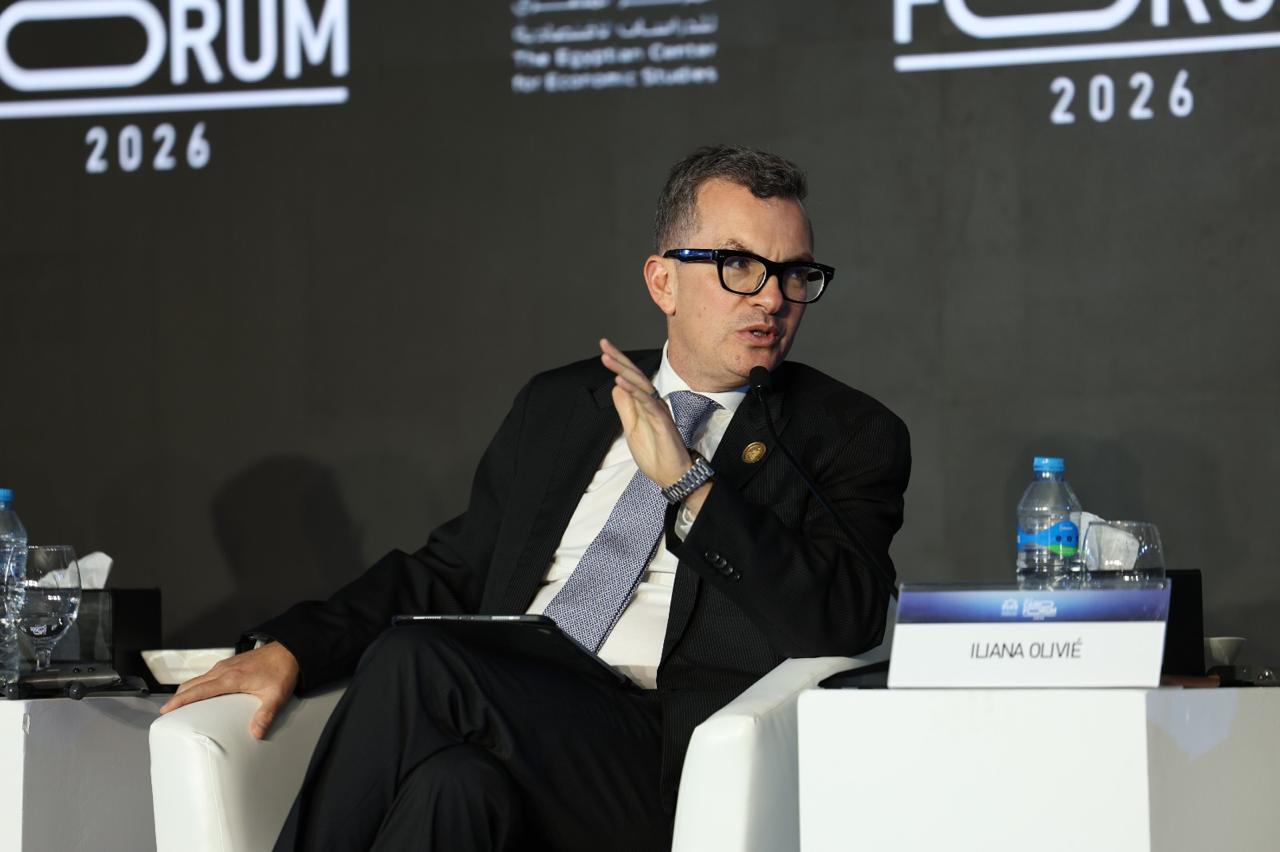
Rostom explained that efforts to reform the global trading environment must ensure timely decision-making and effective implementation.
He also called for economic development priorities to be placed at the heart of the WTO’s agenda by modernising the principle of special and differential treatment to make it more effective rather than abandoning it.
He noted that developing countries need sufficient policy space to implement time-bound industrial policies linked to clear performance indicators, alongside firm rules to address competitive distortions.
Addressing broader economic challenges, Rostom stressed the importance of strengthening transparency and dialogue within the WTO on emerging issues, particularly digital trade, climate-related measures and restrictions linked to economic security requirements.
The Planning Minister also reviewed Egypt’s domestic efforts in this area, highlighting the success of Nafeza, the national single-window platform for Egyptian cross-border trade.
He described the platform as a leading model for integrating and simplifying customs, logistics and regulatory procedures, representing a practical application of trade facilitation in an economy located at the heart of global trade routes.
Rostom concluded by emphasising that the government has implemented several reforms to simplify customs procedures and strengthen transparency.
He said these measures directly contribute to reducing operational and transaction costs, improving supply chain reliability and enhancing the competitiveness of the national economy.
The minister added that digital trade facilitation is no longer optional but has become a fundamental component of comprehensive economic development policies, alongside efforts to develop the industrial sector and diversify the country’s export structure.