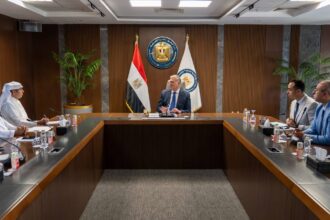

The TeraMed Initiative has launched a Mediterranean Renewable Energy Finance Hub at COP31, aiming to accelerate clean-energy investment across the Arab and Mediterranean region and attract $20bn in investment commitments by 2028.
The hub was unveiled during a high-level session on energy-transition finance attended by officials from Morocco, the United Nations, the European Commission and the League of Arab States, alongside representatives of the Green Climate Fund and regional energy and financial institutions.
The initiative aims to strengthen coordination between governments, financial institutions and renewable-energy developers, improve project readiness, facilitate investment partnerships and address persistent barriers to financing. These include high capital costs, currency risks, fragmented regulatory frameworks and limited capacity for project preparation.
Moroccan Energy, Mines and Sustainable Development Minister Charafat Afailal said the two shores of the Mediterranean shared strong strategic complementarities and significant solar and wind resources.
She said TeraMed’s ambition to catalyse one terawatt of renewable-energy capacity by 2030 would require substantial investment and coordinated action by governments, financial institutions and the private sector.
Rania Al-Mashat, United Nations Under-Secretary-General and Executive Secretary of ESCWA, said investment in renewable energy needed to go hand in hand with electricity infrastructure, regional market integration and supportive policies.
She said TeraMed’s one-terawatt target provided a common direction for regional cooperation and highlighted opportunities to connect Mediterranean energy initiatives with the development of the Pan-Arab Electricity Market and interconnected power systems.
European Commissioner for the Mediterranean Dubravka Šuica welcomed the launch and its target of attracting $20bn in investment by 2028.
She said clean energy could serve as a bridge between the two shores of the Mediterranean, creating jobs, improving industrial competitiveness and strengthening regional economies.
Šuica added that the European Union’s Trans-Mediterranean Renewable Energy and Clean Tech Cooperation Initiative, known as T-MED, aims to mobilise an expected €25bn in investment by 2035 for renewable energy, electricity grids, interconnections and clean technologies.
Mahmoud Fathallah, Director of Environment at the League of Arab States’ General Secretariat, stressed the importance of stronger institutional cooperation across the region to advance the Arab energy-transition agenda and connect it with broader Mediterranean initiatives.
Hajar Khamlichi, North Africa Director at the Platform on International Energy, said the Mediterranean’s challenge was no longer simply recognising its renewable-energy potential but creating the conditions necessary to unlock investment on a large scale.
This would require aligning national policy priorities, project preparation and financial instruments, she said, adding that the real test of regional cooperation would be its ability to translate commitments into investment that accelerates renewable-energy deployment and strengthens regional economies.
Financing regional energy transition
TeraMed officials said the finance hub would provide technical assistance, strengthen policy coordination, develop regional pipelines of investment-ready projects and connect developers with potential financing partners.
They stressed that the hub was designed to complement, rather than duplicate, existing financing mechanisms by improving coordination among financial institutions, policymakers and project developers.
Francesco Corvaro, Special Envoy for Climate Change of the Italian government, participated in discussions on the role of climate diplomacy in supporting renewable-energy investment and regional cooperation.
Amgad Elmahdi, Head of the Middle East Region at the Green Climate Fund, contributed to discussions on improving project investment readiness and addressing barriers to accessing international climate finance.
Jauad El Kharraz, Senior Adviser at the TeraMed Initiative Coordination Unit, said the hub would focus on technical assistance, policy coordination, regional project pipeline development and matching projects with potential investors.
Iskander Erzini Vernoit, Co-founder and Executive Director of the IMAL Initiative for Climate and Development, highlighted the importance of complementing the existing financing architecture and addressing funding gaps facing small- and medium-scale renewable-energy projects.
Discussions also addressed the mobilisation of domestic capital, improvements to regulatory frameworks and stronger cross-border cooperation to accelerate renewable-energy deployment and industrial decarbonisation.
The finance hub forms part of TeraMed’s broader ambition to catalyse one terawatt of renewable-energy capacity across the Mediterranean by 2030.
The initiative said achieving this target would require investment not only in renewable-energy generation but also in electricity grids, cross-border interconnections, supportive regulatory frameworks and industrial electrification.
The next phase will focus on strengthening institutional partnerships, developing credible project pipelines and establishing financing pathways capable of translating the region’s renewable-energy potential into sustained investment, TeraMed said.