

Egypt’s Ministry of Tourism and Antiquities is using augmented reality (AR) and artificial intelligence (AI) to recreate the fifth-century architecture and spiritual heritage of the historic Abu Mena archaeological site and Saint Mina Monastery in Alexandria.
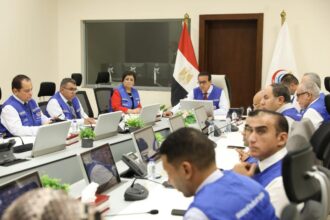
During a meeting chaired by Minister of Tourism and Antiquities Sherif Fathy, ministry officials met with a delegation led by Essam Khodr from the Cabinet’s Information and Decision Support Center (IDSC) to review progress on the digital restoration initiative.
The project aims to take visitors on an interactive, immersive journey back to the fifth century AD, when Abu Mena reached the height of its importance as one of Christianity’s major pilgrimage centres.
Drawing on historical documents, original manuscripts, records from the Coptic and Greco-Roman Museums, and accounts by historical scholars, developers are creating detailed 3D models recreating the city’s ancient layout, daily life, clothing and religious rituals.
“This interactive experience must be built on a compelling storytelling framework that blends historical accuracy with visual appeal,” Fathy said.
He stressed that the project should convey the era’s cultural and spiritual significance while urging the team to adhere to the implementation timetable.
The digital experience will be accessible through a dedicated interactive webpage and at the Abu Mena Visitor Centre.
A UNESCO landmark rescued
Located west of Alexandria, Abu Mena developed around the tomb of Saint Mina and was inscribed on the UNESCO World Heritage List in 1979.
In 2001, rising groundwater levels threatened the structural integrity of its monuments, prompting its inclusion on the List of World Heritage in Danger.
Following an 11-year groundwater control project implemented by the Egyptian government, the site overcame the threat and was removed from the List of World Heritage in Danger in 2025, while retaining its World Heritage status.
The project’s technological implementation brings together several specialists, including representatives from DroneTech, responsible for spatial surveying and 3D modelling, artistic directors and digital preservation experts from the IDSC’s Virtual Reality Unit.
Senior officials from the Egyptian Tourism Authority and the Supreme Council of Antiquities are also involved in the initiative.