

Beijing – Egypt’s transition towards cleaner transportation presents a significant opportunity for the ride-hailing sector, but the pace of electric vehicle (EV) adoption will depend on infrastructure readiness, investment and affordability for drivers and passengers.
In an interview with Daily News Egypt, Stephen Zhu, Chief Executive Officer of DiDi’s International Business Group, described the shift towards electric mobility in Egypt as a matter of time rather than a question of whether it will happen. He stressed, however, that building the right partnerships and developing a supportive ecosystem would be essential to making the transition commercially viable and sustainable.
Zhu said introducing electric vehicles into Egypt’s ride-hailing ecosystem would require careful preparation and coordination among market participants, rather than a rapid rollout that could place additional financial or operational pressure on drivers and business partners.
For DiDi, this means establishing partnerships with vehicle manufacturers to ensure the availability of suitable electric models, working with fleet operators and vehicle owners to integrate EVs into ride-hailing services, and cooperating with local stakeholders on charging infrastructure and electricity supply.
The approach reflects the company’s broader strategy of adapting its business model to the specific conditions of each market, particularly in emerging economies where affordability, vehicle availability and infrastructure readiness can determine the pace of adoption.
Drivers’ economics at the centre of the EV transition
One of the strongest incentives for introducing electric vehicles into ride-hailing operations is their potential to reduce daily operating costs. According to estimates discussed by Zhu, EVs can lower operating expenses by approximately 30% to 40% compared with conventional petrol-powered vehicles, depending on operating conditions.
Such savings could directly improve drivers’ net earnings, particularly in a business where fuel and maintenance account for a significant share of daily expenses.
Zhu’s remarks suggest that DiDi views the economic benefits for drivers as central to its assessment of the transition, rather than treating electrification solely as an environmental or technological objective. Lower energy and maintenance costs could increase drivers’ take-home income, support their continued activity on the platform and ultimately contribute to service quality.
The company is also mindful of the financial burden that could arise if drivers were required to replace their existing vehicles before the market and supporting infrastructure were ready.
In Egypt, affordability remains particularly important when determining vehicle requirements. Zhu noted that vehicle standards and regulatory approaches need to reflect the characteristics of each market. Requirements that may be suitable in countries where newer and more expensive vehicles are widely accessible could prove difficult to implement in markets where drivers and passengers are more sensitive to costs.
For example, imposing strict requirements that vehicles must be less than five years old could increase the financial burden on Egyptian drivers without necessarily addressing passengers’ main priorities, as affordability remains an important consideration when choosing ride-hailing services.
DiDi therefore seeks to balance passenger expectations with drivers’ financial capabilities, allowing the platform to maintain accessible services while ensuring an adequate standard of vehicle quality.
Egypt’s EV market remains at an early stage
Despite growing interest in electric mobility and government efforts to attract more EV models to Egypt, the market remains relatively small compared with more mature markets.
The discussion placed the estimated number of electric vehicles in Egypt at between 10,000 and 20,000, highlighting the early stage of market penetration and the need to develop the supporting ecosystem before large-scale adoption becomes feasible.
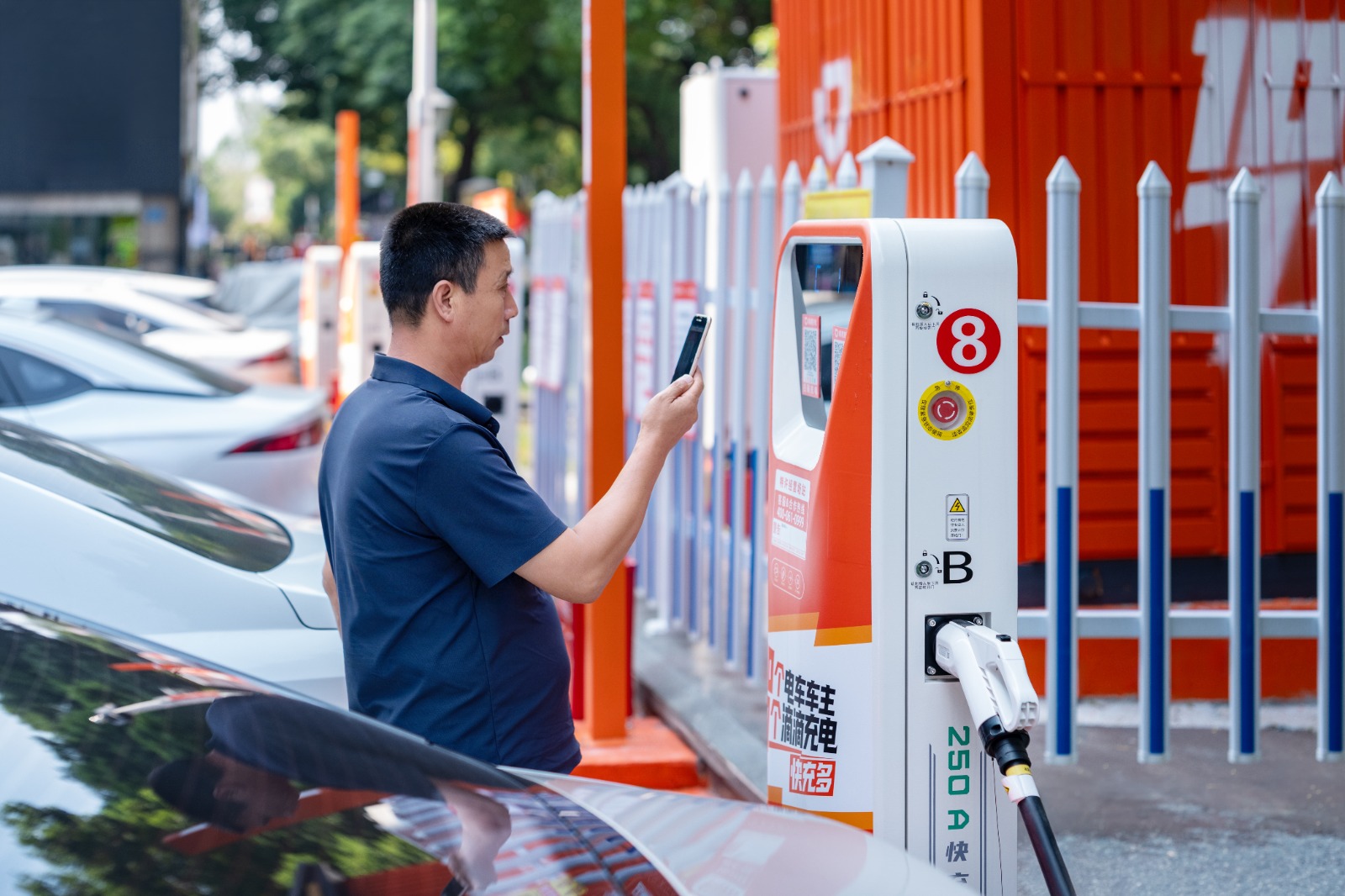
For DiDi, vehicle availability alone will not determine the timing of expansion. The company must also assess the distribution of charging stations, the capacity of local electricity networks, the availability of suitable parking areas and the commercial viability of operating charging facilities.
Rather than relying on a fixed minimum number of privately owned electric vehicles as a prerequisite for establishing charging stations, investment decisions should be based on a broader assessment of market demand, traffic density, EV penetration rates and local electricity grid capacity.
Large urban centres with higher population densities and stronger demand for electric mobility are likely to offer more attractive conditions for charging infrastructure investment. However, sufficient electricity capacity and suitable locations remain essential to ensuring reliable operations.
The development of charging infrastructure also requires coordination with regulators and commercial partners. In some markets, licensing and regulatory frameworks may require charging-service providers to establish a specified number of stations or charging points within a defined period.
Learning from China and Latin America
DiDi’s experience across international markets illustrates how the pace and structure of electric mobility adoption can vary significantly.
China has developed a more advanced ecosystem for electric and autonomous mobility, supported by extensive testing, technological development and large-scale EV deployment. Its experience demonstrates the importance of accumulating operational experience and testing new technologies over extended periods before expanding them commercially.
In contrast, emerging markets such as Egypt, Brazil and Mexico require a more gradual approach that takes into account local purchasing power, infrastructure readiness and the interests of drivers and fleet partners.
Mexico, in particular, has emerged as an important regional innovation hub for DiDi, serving as a market for introducing and developing different products and services. The company has also been exploring opportunities to expand its service offering and improve the passenger experience through products such as DiDi Premier, which targets customers seeking higher service standards and better vehicles.
Egypt, meanwhile, represents a market with considerable growth potential. The company’s priorities include expanding access to ride-hailing services, improving affordability and gradually introducing more sustainable mobility solutions.
Zhu’s comments also point to the importance of developing products that reflect the needs of emerging-market users rather than simply replicating services available in more developed economies.
This could include expanding access to two-wheel mobility, motorcycle-based services and potentially bike-sharing solutions, alongside other affordable transport options that bring more passengers and drivers into the digital mobility ecosystem.
When asked about the potential introduction of additional international services, including freight-related offerings, Zhu did not indicate a definitive launch timetable for Egypt. Instead, he highlighted the importance of identifying products that respond to local demand and broaden participation in the platform’s ecosystem.
Battery technology, charging costs and grid integration key to EV transition
Battery technology and charging solutions will also play an important role in determining the feasibility of the transition. Improvements in battery capacity, charging speed and operating life could make electric vehicles increasingly attractive for high-utilisation businesses such as ride-hailing.
Battery swapping was also discussed as a possible alternative to conventional charging. However, the model requires substantial upfront capital investment and vehicles designed to support compatible battery systems, making its adoption dependent on the availability of the necessary technology and commercial infrastructure.
The discussion also touched on the potential for EV batteries to support electricity networks through virtual power plant systems. Under such models, connected vehicle batteries can potentially store energy and feed electricity back into the grid when needed, helping improve grid flexibility and stability.
The initial investment required to establish charging infrastructure can also be substantial. An indicative estimate discussed for a facility with around 10 charging points in China ranged between RMB 1m and RMB 2m, equivalent to approximately $140,000 to $280,000, depending on the exchange rate and project specifications. Actual costs vary according to charger types, grid connections, land and installation requirements.
Autonomous mobility and the role of human drivers
Beyond electrification, DiDi is also assessing the longer-term implications of autonomous mobility and artificial intelligence for the transport sector.
The development of fully autonomous vehicles requires extensive testing and accumulated driving experience to ensure safety, particularly in complex traffic environments. China’s experience, where autonomous mobility technologies have undergone years of testing and accumulated substantial operational mileage before wider commercial deployment, illustrates the importance of this process.
For markets with more complex and varied traffic conditions, a gradual approach is essential to avoid introducing technologies before they are sufficiently reliable.
Rather than viewing autonomous systems as an immediate replacement for human drivers, the discussion pointed to the possibility of hybrid models in which automated technologies complement human-operated services.
Artificial intelligence agents could also influence how consumers discover and request mobility services in the future. However, their commercial value will depend on whether they deliver tangible convenience and benefits that encourage users to change their existing habits.
For DiDi, the broader challenge is therefore not simply to introduce new technologies, but to ensure that innovation translates into more accessible, reliable and affordable services.


