

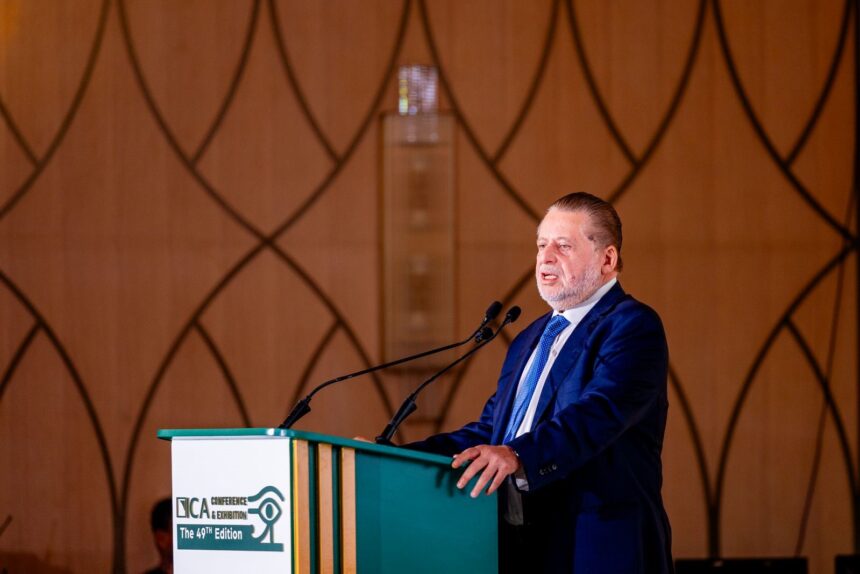
Hassan Abdalla, Governor of the Central Bank of Egypt (CBE), has reaffirmed the bank’s commitment to maintaining financial stability and strengthening the resilience of the banking sector through a transparent approach and a monetary policy framework focused on bringing inflation down.
He stressed that this commitment goes hand in hand with maintaining a flexible, market-determined exchange rate regime, which helps the economy absorb external shocks, withstand volatility and consolidate the gains achieved through the reforms introduced in 2024.
Abdalla made the remarks during his opening address at the 49th Annual Conference of the Arab Federation of Financial Markets Traders.
In his speech, Abdalla expressed his pleasure at participating in the event, which brings together senior executives from treasury departments, capital markets and banking institutions from around the world.
He also highlighted the importance of the issues on the conference agenda, particularly as global financial markets undergo significant structural changes driven by geopolitical tensions, rapid technological developments, volatile capital flows and shifts in monetary policy.
The Governor reiterated that the CBE remains committed to maintaining financial stability and strengthening the resilience of the banking sector through transparency and a monetary policy framework focused on reducing inflation.

He also reaffirmed the bank’s commitment to a flexible, market-determined exchange rate regime, which enables the economy to absorb external shocks, withstand volatility and build on the gains achieved through the 2024 reforms.
Abdalla reviewed the positive indicators recorded by the Egyptian economy despite unprecedented global challenges.
These include net international reserves reaching an all-time high of $57.5bn in October, net foreign assets in the banking sector rising to their highest level since 2011, and inflation rates declining.
He added that the CBE is also committed to balancing technological innovation with investment in human capital to support the future development of the banking sector.
In this regard, the bank is leveraging artificial intelligence applications through its Data Science Centre to enhance operational efficiency and improve economic analysis.
However, Abdalla emphasised that expanding the use of these technologies requires robust risk management frameworks, stronger corporate governance and well-established cybersecurity systems to mitigate risks that could threaten financial stability and disrupt markets.
The Governor also praised the professionalism and expertise of employees in Egypt’s banking sector.
He noted that many banking professionals have gone on to assume senior leadership positions in state institutions and government ministries, reflecting the capabilities of the sector’s workforce and its ability to provide leaders across different fields.
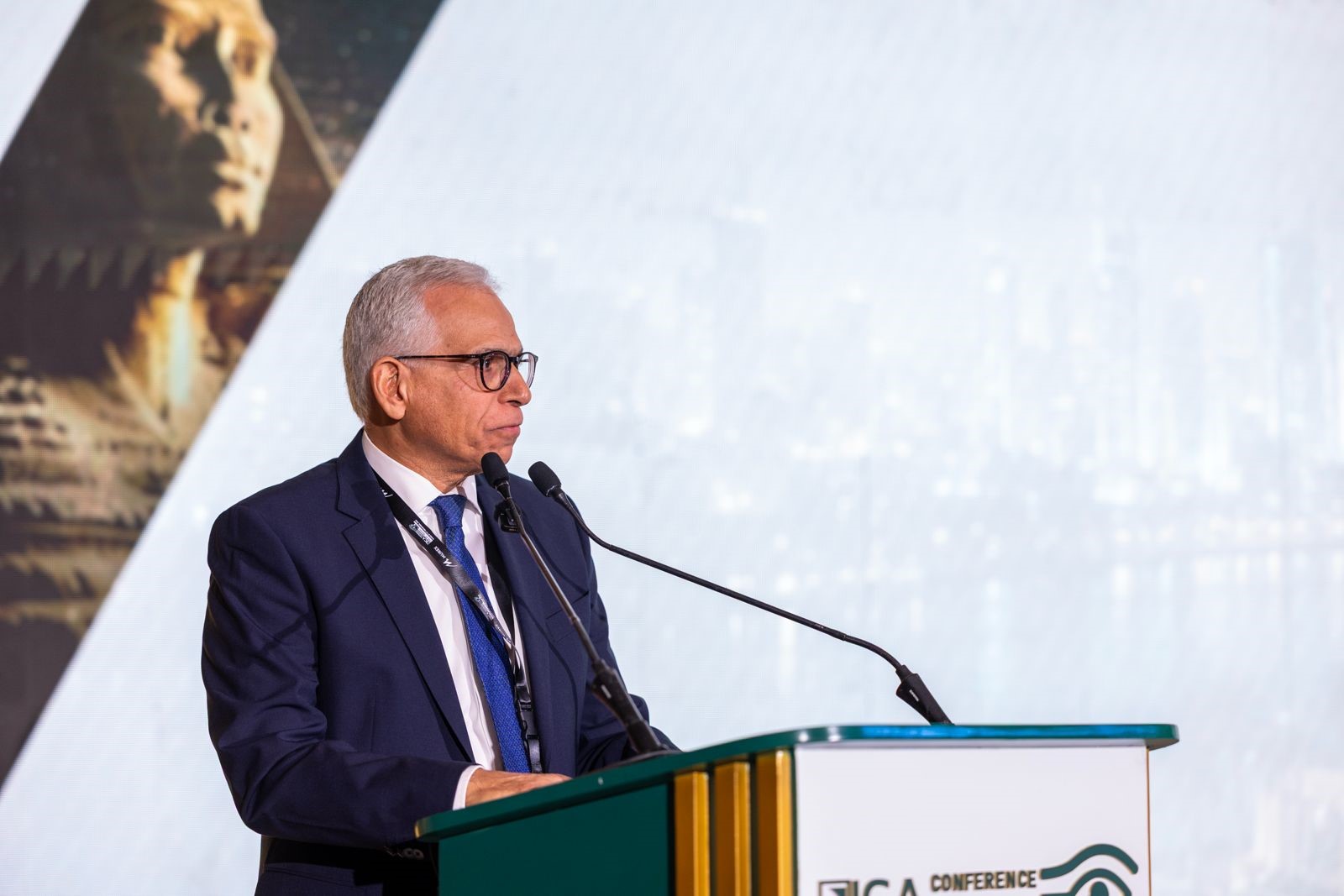
For his part, Omar Khattab, Chairperson of the Egyptian Financial Markets Association (ACI Egypt), said this year’s conference had attracted broad participation, with attendance exceeding expectations.
He stressed that the participation of the CBE Governor, alongside the Central Bank’s sponsorship of the conference, represented a significant contribution to the event.
Khattab added that the Governor’s presence reflected the importance attached to the conference at both domestic and international levels and lent particular significance to this year’s edition.
He explained that the conference, which is held annually in a different country, aims to develop a shared vision for addressing current global challenges amid uncertainty in the international economy.
It also highlights the association’s role in supporting the investment environment by promoting innovation initiatives and expanding opportunities for cooperation at domestic, regional and international levels.
The conference sessions address several key topics, including the outlook for the global economy amid current international developments and its ability to withstand shocks, the future of the international monetary system, and the implications of rising sovereign debt levels and mounting fiscal pressures.
The conference also explores promising investment opportunities in Egypt’s domestic market, the Middle East and North Africa, Africa and Asia.
Other discussions examine the role of artificial intelligence in reshaping banking operations, treasury and asset management, and trading activities.
The agenda also covers the growing momentum behind digital assets and emerging forms of digital currencies, as well as their implications for financial markets, alongside changes in the role of energy, commodities and global supply chains.
Established in 1998, the Egyptian Financial Markets Association (ACI Egypt) brings together financial markets professionals working in banks and financial institutions across Egypt.


