

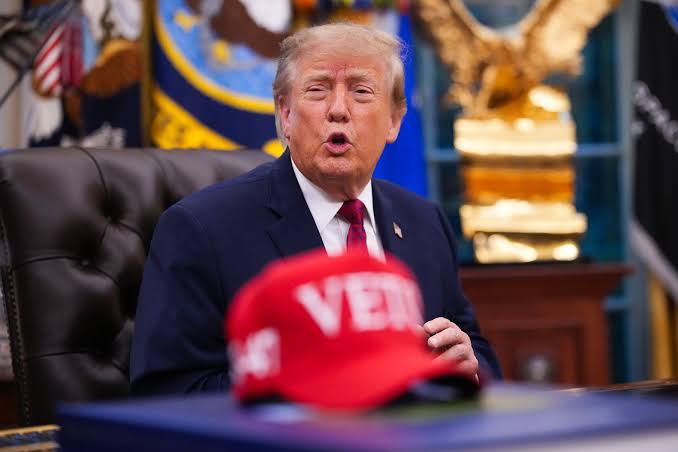
The Republicans’ loss of control of both chambers of Congress in the 2026 midterm elections was more than a political setback for President Donald Trump. It exposed a fundamental shift in the political environment in which he will have to govern during the final two years of his presidency. Beginning in January 2027, Trump will face a Congress controlled by the Democratic opposition, while remaining in the White House until January 2029 and retaining his presidential powers, including authority over foreign policy and command of the armed forces. This political configuration raises a question that goes beyond Washington’s partisan divisions: Will Trump’s loss of Congress weaken American influence abroad, or will it push the president to make greater use of his remaining executive powers to secure foreign policy achievements that compensate for his domestic political setbacks?
The significance of this question lies partly in the fact that the election results cannot be separated from foreign policy itself. The war with Iran, together with its impact on energy prices, the cost of living, and military spending, became part of the domestic political calculations that shaped voters’ decisions. The war was no longer simply a security issue handled by the administration at a distance from ordinary Americans’ concerns. It had become a political liability affecting the president’s approval ratings and his party’s ability to retain power. This is an important development because it suggests that the domestic political consequences of American foreign policy decisions are becoming increasingly difficult to ignore.
However, losing control of Congress does not mean that Trump has lost his ability to direct military operations, negotiate with adversaries, or reach agreements with allies. The American president retains considerable executive authority in foreign affairs, and Congress cannot simply strip him of that power. Nevertheless, Democrats can use their legislative, oversight, investigative, and budgetary powers to impose greater political and financial constraints on the administration. They can question senior officials about the conduct of the war, investigate its costs and objectives, and exert pressure over military assistance and sanctions. In other words, Trump will remain capable of making consequential decisions, but securing the political and financial support needed to sustain some of them may become considerably more difficult.
This is where a political paradox emerges. A president whose ability to advance his domestic agenda has been weakened may become increasingly interested in securing achievements abroad, where his executive authority remains comparatively broad. Trump may seek to present himself as the president who managed to end a war, impose an agreement, or reshape regional relations at a time when he is facing growing opposition in Washington. Yet this possibility points in two different directions. It could encourage him to accelerate diplomatic efforts and present an agreement as a political victory. Equally, however, it could lead him to adopt a more confrontational posture if he believes that projecting strength is the best way to regain the political initiative.

The future of the confrontation with Iran will therefore be one of the principal tests of the coming period. Trump needs a political exit from a war whose domestic costs have become increasingly visible. At the same time, he cannot afford to accept an agreement that his political opponents could portray as a retreat from the war’s stated objectives. Tehran, for its part, is not necessarily prepared to accept American demands that fail to address its security concerns or safeguard its interests. Between the two sides, Israel will remain an influential factor in calculations involving both escalation and diplomacy, while Gulf states will bear a substantial share of the risks associated with any renewed confrontation, particularly in relation to energy security, trade flows, and regional stability.
Against this backdrop, the most plausible scenario may be neither another full-scale American war nor a comprehensive and immediate settlement. Rather, it may involve the continuation of a dual-track policy of pressure and negotiation, punctuated by occasional episodes of escalation. Trump may seek a limited agreement that allows him to claim that he has achieved his objectives, even if the fundamental disputes remain unresolved. Such an arrangement could temporarily reduce tensions, but it would not guarantee lasting stability unless it addressed the underlying sources of conflict, including Iran’s nuclear programme, regional security, its missile capabilities, and the role of its allied forces and groups across the region.
Israel, meanwhile, may find itself facing a more complicated political environment in Washington than the one it has grown accustomed to in recent years. The new Democratic majority could give members of Congress greater room to scrutinise military assistance, debate the conditions governing its use, and raise questions about the costs of continued military operations. This does not, however, necessarily signal a fundamental shift in the American-Israeli alliance. A distinction must be made between growing criticism of the Israeli government’s policies and abandoning America’s strategic commitments to Israel’s security. A more likely outcome is a clearer and more visible debate over the limits and nature of American support, rather than any sudden withdrawal of that support.
For Arab countries, the implications may be even more consequential. In recent years, some regional understandings have relied heavily on direct relations with the American president and his ability to make decisions quickly. A divided government, however, exposes the risks of relying exclusively on the White House. Trump may be able to offer a security commitment or negotiate a political understanding while struggling to secure the funding or legislative backing required to sustain it. Arab governments will therefore need to approach Washington as a political system comprising multiple institutions and centres of decision-making, rather than as a single presidency whose policies and priorities may change over time.
For Egypt, this issue carries particular significance because regional stability is closely connected to the security of the Red Sea and the Suez Canal, developments in Gaza, relations with Israel, and the security of the Gulf. Any shift in American policy towards Iran, or the continuation of the confrontation with Tehran, will have implications extending well beyond the two countries themselves. It could affect trade and energy flows, regional security arrangements, and the ability of Arab states to protect their interests in an increasingly volatile international environment. Egypt’s and the wider Arab world’s interests therefore require a long-term strategic approach to political changes in Washington, rather than an exclusive focus on the relationship between Trump and the Democrats.
Another factor deserves equal attention: the United States does not view the Middle East in isolation from its broader international strategic priorities. China has become an increasingly central concern for Washington, while the war in Ukraine continues to consume resources and political and military attention. These pressures may encourage the American administration to pursue regional settlements that reduce the need for direct military involvement and allow Washington to redirect more of its strategic focus towards Asia. This does not mean, however, that the United States is preparing to abandon the Middle East. The region’s strategic location, energy security, maritime trade routes, and Israel’s security remain critical interests that make a complete American withdrawal an unrealistic prospect.
Ultimately, the significance of the 2026 midterm elections lies not simply in the political setback they have dealt Trump, but in what they reveal about the limits of his ability to translate presidential authority into sustainable political consensus. The next two years may become a period in which Trump seeks to secure a major foreign policy achievement that will define his political legacy, while Democrats attempt to constrain some of his decisions and hold his administration accountable. Yet the Middle East should not assume that this political confrontation will automatically produce a more balanced or less interventionist American foreign policy. A president constrained at home may still retain considerable freedom to make far-reaching decisions abroad, and those decisions may become even more closely tied to his personal political calculations.
The most important lesson for the region is that political change in Washington does not necessarily translate into a change in American strategic interests; it may, however, fundamentally alter the way those interests are pursued. Between a president seeking to end his term with a major international achievement and a Congress determined to reassert its oversight role in American foreign policy, the Middle East will face two simultaneous possibilities: new opportunities for negotiating regional settlements and the risks of hasty decisions lacking a stable domestic political consensus. In either case, the region will not simply be a passive recipient of the consequences of Washington’s political struggle. Its own interests, security, and strategic choices will be directly shaped by the way that struggle unfolds.
Dr. Marwa El-Shinawy, academic and writer


