

Prime Minister Mostafa Madbouly began a field visit to Dakahleya on Saturday to inspect several service and development projects, including factories operating in the Mit Ghamr Investment Zone, as the government seeks to address obstacles facing ongoing projects, accelerate their operations and encourage further industrial investment.
The visit also includes inspections of food exhibitions, housing projects under the national project to develop governorate capitals, the plasma donation centre in Mansoura and the new liver transplant centre at Mansoura University.
Madbouly said the tour aims to follow up on development projects across several sectors and assess challenges requiring coordination among ministries and state agencies to resolve.
He added that the food exhibitions are intended to ensure the availability of a range of essential commodities to citizens at affordable prices, while visits to industrial facilities reflect the government’s commitment to supporting manufacturing, attracting investment and creating jobs.
The prime minister was accompanied by Higher Education and Scientific Research Minister Abdelaziz Konsowa, who is also acting Minister of Culture; Investment and Foreign Trade Minister Mohamed Farid Saleh; Industry Minister Khaled Hashem; Dakahleya Governor Tarek Marzouk; Urban Development Fund Chairman Khaled Seddik; and General Authority for Investment and Free Zones (GAFI) CEO Mohamed Awad, alongside members of parliament and local executive officials.
Mit Ghamr zone reaches full occupancy
Madbouly began his visit by inspecting the Mit Ghamr Investment Zone, affiliated with GAFI, which covers 18 feddans. The zone has reached full occupancy, with 107 industrial units of different sizes, attracting investments exceeding EGP 500m and generating around 2,500 job opportunities. A further 160 projects are on the waiting list, according to a presentation delivered during the visit.
The zone began operations in July 2021 and offers industrial units measuring 144, 288 and 576 square metres, providing flexible spaces for businesses operating in engineering, electronics and metal industries.
Madbouly described investment zones as a successful model for supporting small and medium-sized enterprises (SMEs) and providing sustainable employment opportunities for young people in governorates. He said the government is continuing to improve the investment climate and provide support for deepening local manufacturing and strengthening the competitiveness of Egyptian products in domestic and international markets.
He called for expanding the investment-zone model to new cities and other governorates, highlighting its potential to attract investment and support industrial activity beyond major urban centres.
Farid said investment zones are an important tool for localising economic development and deepening domestic manufacturing through the establishment of integrated industrial clusters across governorates. He added that developing these zones and making better use of their production capabilities would help attract investment and create an environment conducive to production and business expansion.
Dakahleya Governor Tarek Marzouk said the diversity of industrial activities in the Mit Ghamr zone reflects the governorate’s production capabilities, skilled workforce and industrial expertise, particularly in Mit Ghamr, which has a long history of manufacturing and craftsmanship.
Broad range of locally manufactured products
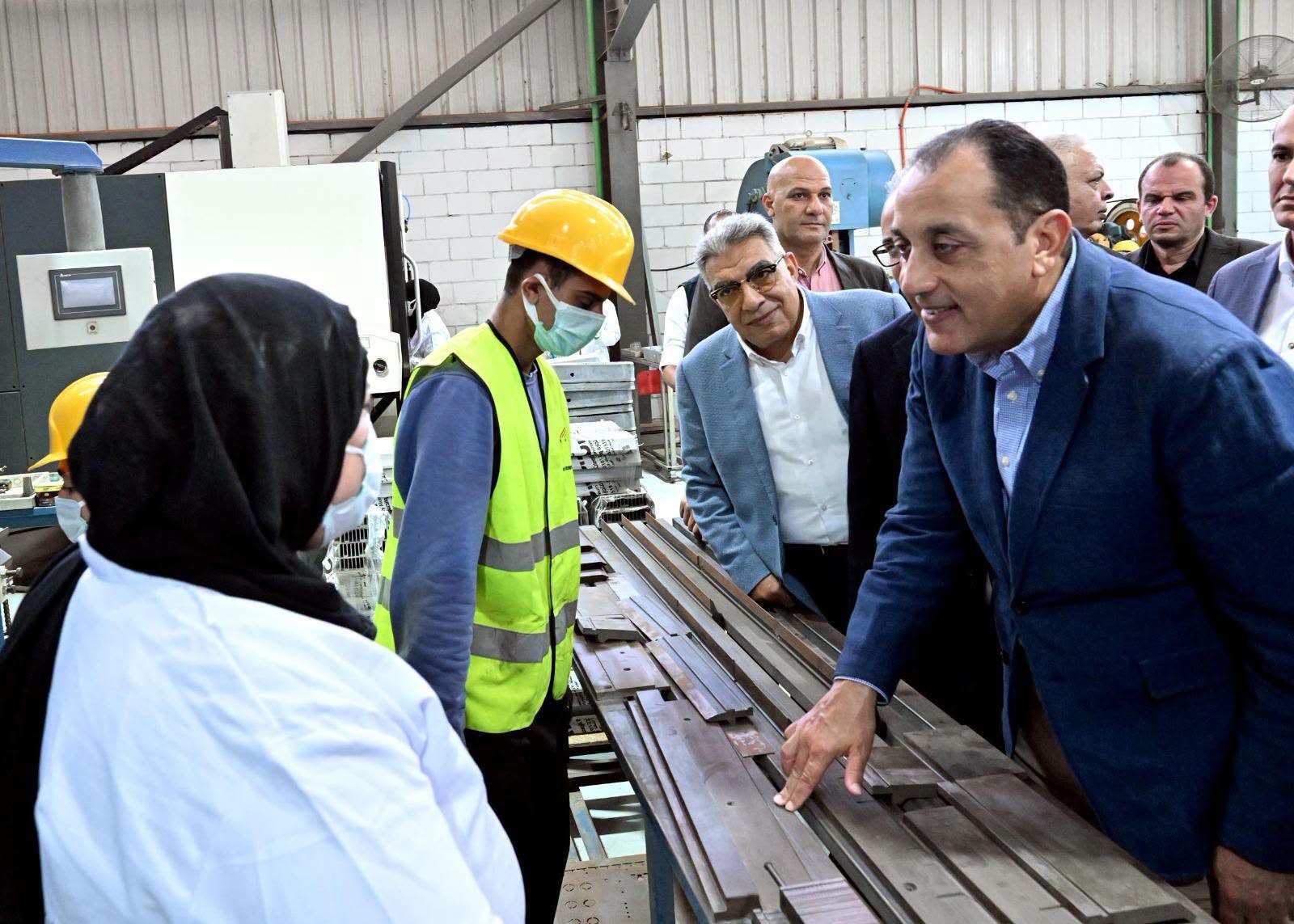
During the visit, Madbouly toured an exhibition showcasing products made by companies operating in the zone, reviewing their manufacturing activities, production processes, reliance on locally sourced components and raw materials, and potential to expand exports.
The exhibits included aluminium cookware, pharmacy supplies and hardware, valves and water mixers, LED bulbs and lighting fixtures, refrigerator coils, personal care products such as shower gels, shampoos and oils, fans, ventilation equipment, mosquito zappers and dental supplies.
Other products included office furniture and school desks, laboratory and diagnostic reagents, metal cabinets and other metal products, central air-conditioning equipment, cooling and ventilation units, and metal, plastic and paper packaging. The exhibition also featured engineering and electrical products, including cooker timers, touch-sensitive electrical switches and devices designed to protect against electrical current fluctuations.
Participating companies included Taiba Al-Ayadi, Yebito Supplies, Miawy Metal Forming, Al Amer Group, Dawood Refrigeration Products, Al Andalus Perfumes and Cosmetics, Egyptian Electrical and Home Appliances Manufacturing and Assembly, Avanti Medical, Scopas, Siamco for Contracting and Metal Forming, Zain Egypt for Engineering Industries and Works, Alpha Omega, Egyptian Tinplate and Plastics, and Eco Star Engineering Industries, among others.
Madbouly stressed the importance of enabling local manufacturers to serve the domestic market while continuing to expand exports, noting that greater reliance on locally manufactured products could reduce imports and ease demand for foreign currency.
One cosmetics manufacturer told the prime minister that its factory uses 100% Egyptian raw materials and initially directed all its production towards export markets. The company is preparing to launch its products in the domestic market in the coming period.
Madbouly also visited the pavilion of BIG EDUCATION, which was established in 2018 as a brand of BIG Investment and Development Group.
The business initially operated with five employees and investments of EGP 250,000, focusing on designing school furniture and outsourcing its production. It later established a presence in the Mit Ghamr zone and received its first factory in 2025.
The prime minister said Egyptian factories should make greater use of their production capacity to meet local demand while maintaining their presence in export markets. He also highlighted the role of local manufacturing in replacing imported goods and strengthening the competitiveness of national industry.
ELC plans new factory in Sadat City
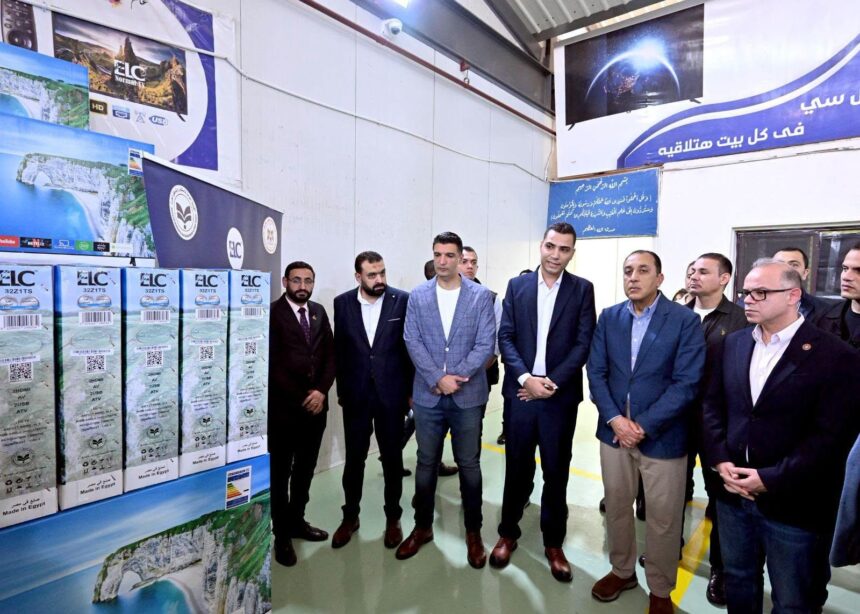
Madbouly also inspected ELC’s television manufacturing and assembly plant in the investment zone. The company produces conventional and smart television sets and has an annual production capacity of 100,000 units.
Company Chairperson Mohamed Mostafa El-Helwany said ELC was established in 2021 and began production in Mit Ghamr in 2022. The factory occupies 1,440 square metres, with investments of EGP 100m, and provides around 75 jobs.
The company distributes its television products across Egyptian governorates and exports part of its output to African and other international markets.
ELC plans to expand its manufacturing operations by establishing a new factory in Sadat City on a 7,000-square-metre site. The facility will produce interactive screens and television components, with production scheduled to begin in November 2027.
Madbouly noted that the electronics industry is among the sectors receiving government attention as part of efforts to strengthen Egypt’s industrial base and diversify production. He stressed the importance of expanding the local manufacture of technology products and leveraging the expertise and capabilities of Egyptian companies to meet a larger share of domestic demand.
The prime minister affirmed the government’s readiness to support ELC’s expansion plans to increase production and exports.
Arab Copper Centre produces 500,000 units annually
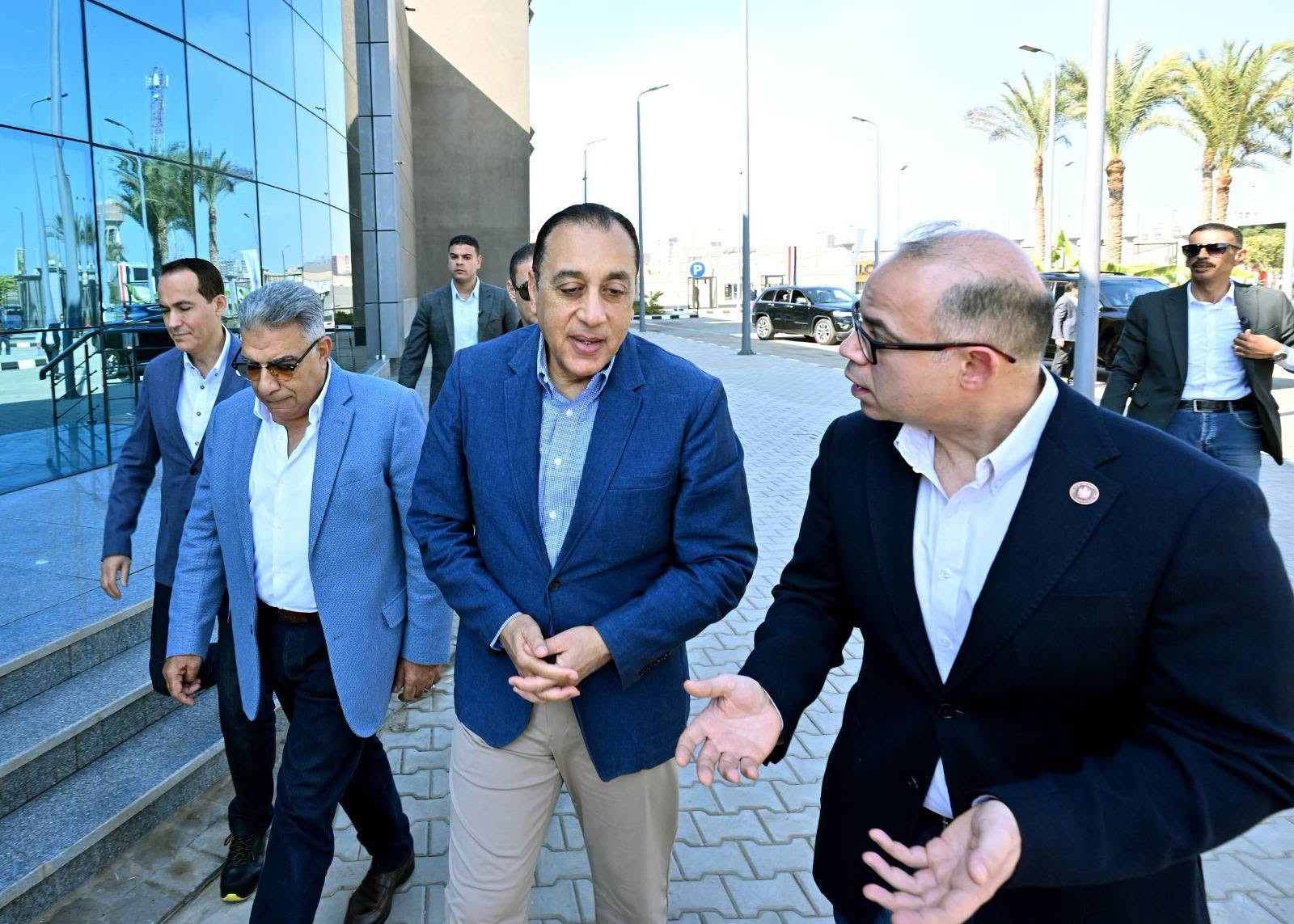
Madbouly also visited the Arab Copper Centre for Engineering Industries, which manufactures and assembles lighting fixtures and electrical panels.
Chairman Islam El-Nahas said the company was established in 2021 in the Mit Ghamr zone, occupying a 1,728-square-metre site with investments of approximately EGP 100m.
The company began production within six months of receiving its industrial unit and has an annual production capacity of around 500,000 pieces. Its products include street and public-square lighting fixtures, as well as electrical panels.
The prime minister reviewed the factory’s integrated production line, which includes cutting sheet metal according to required designs, followed by bending, forming, welding and machining. Locally manufactured components are then assembled with other parts, including glass and plastic components, to produce finished lighting fixtures.
Marketing Director Amir El-Nahas said the company’s products are supplied to the New Urban Communities Authority for projects including New Alamein and the New Administrative Capital. The company also supplies electrical panels and various types of lighting fixtures to the domestic market.
He added that the company employs around 80 people and has a distribution network covering most Egyptian governorates through its transport fleet and agents.
Industrial expansion and import substitution
The Mit Ghamr zone also provides supporting services for investors and employees, including an ambulance point, a fire station, a Banque Misr branch, a mosque and a five-a-side football pitch.
At the end of the tour, the prime minister stressed the importance of increasing reliance on Egyptian raw materials, encouraging factories to expand production and exports, and enabling local manufacturers to supply products that were previously imported.
These efforts aim to reduce the import bill, increase foreign currency earnings and strengthen the competitiveness of Egyptian industry.


