

Egypt’s Ministry of Industry has introduced amendments to the Industrial Priority Sectors Support Initiative, expanding its scope to cover working capital financing and all industrial activities, increasing financing ceilings for individual borrowers and maintaining incentives that can bring interest rates down to 13%.
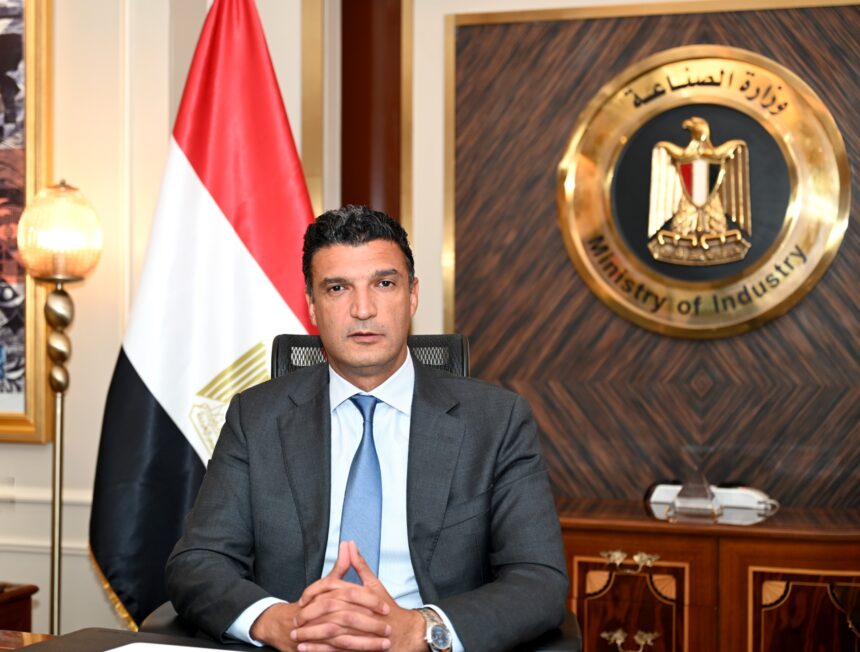
Minister of Industry Khaled Hashem announced the amendments following their approval by the Cabinet at its meeting on November 25, 2026. He said the changes respond to directives from President Abdel Fattah Al-Sisi, recommendations from Egypt Forum 2026, and demands raised by the business community and the Federation of Egyptian Industries.
Under the revised framework, manufacturers will be able to use financing to meet working capital requirements, including the purchase of raw materials, production supplies and spare parts, in addition to funding machinery, equipment and production lines.
Hashem said the amendments also extend the initiative to all industrial activities, replacing the previous sector-specific restrictions. The expansion aims to provide equal financing opportunities for manufacturers seeking to increase production capacity and strengthen integration between strategic industries and their supporting and intermediate industries.
The amendments also double the maximum financing limit for a single borrower to EGP 200m from EGP 100m, while increasing the ceiling for a borrower and its related parties to EGP 250m from EGP 150m.
The minister added that the initiative introduces greater flexibility in eligibility requirements concerning the readiness of industrial facilities. Rather than requiring construction works to be fully completed, eligibility will be assessed against the project’s implementation schedule, provided that at least 60% of construction works have been completed within one year of the project’s commencement.
The measure is intended to address financing obstacles facing viable industrial projects still under construction, in coordination with the Industrial Development Authority (IDA).
To support efforts to bring idle factories back into operation, the revised initiative will also give priority to newly established entities resulting from the merger of distressed or closed factories with new investors. This preference is conditional on the absence of outstanding dues to banks or non-bank financial institutions and on the new entity not having previously benefited from the Distressed Clients Support Fund.
Hashem said additional financing incentives would remain in place, allowing the initiative’s interest rate to fall from 15% to as low as 13%, depending on the extent of local component integration and the development of new industrial activities.
Under the revised incentive structure, the interest rate will be reduced by 1 percentage point if the local component share increases by between 7% and 10%, and by 1.5 percentage points if the increase exceeds 10%. A 2-percentage-point reduction will apply to newly established industrial activities involving products not previously manufactured locally and with significant import volumes.
Industrial facilities located in areas most in need of development will also continue to receive priority under the initiative.
Meanwhile, Nahed Youssef, head of the Industrial Development Authority, said the authority would oversee the technical and regulatory aspects of implementing the initiative and ensure that financing reaches eligible manufacturers.
The authority will receive applications and supporting documents at its headquarters in Fifth Settlement, New Cairo, as well as through its regional branches across Egypt’s governorates.
Youssef explained that the authority’s Industry Support Unit would assess applications, review construction completion rates and project implementation schedules, and conduct field inspections to verify applicants’ seriousness and compliance with technical and operational requirements.
The authority will subsequently issue the necessary technical approvals to financing entities to expedite access to funding for eligible factories.
Youssef urged manufacturers to take advantage of the initiative’s revised terms, noting that the programme will remain in effect for five years from the date of its launch.