
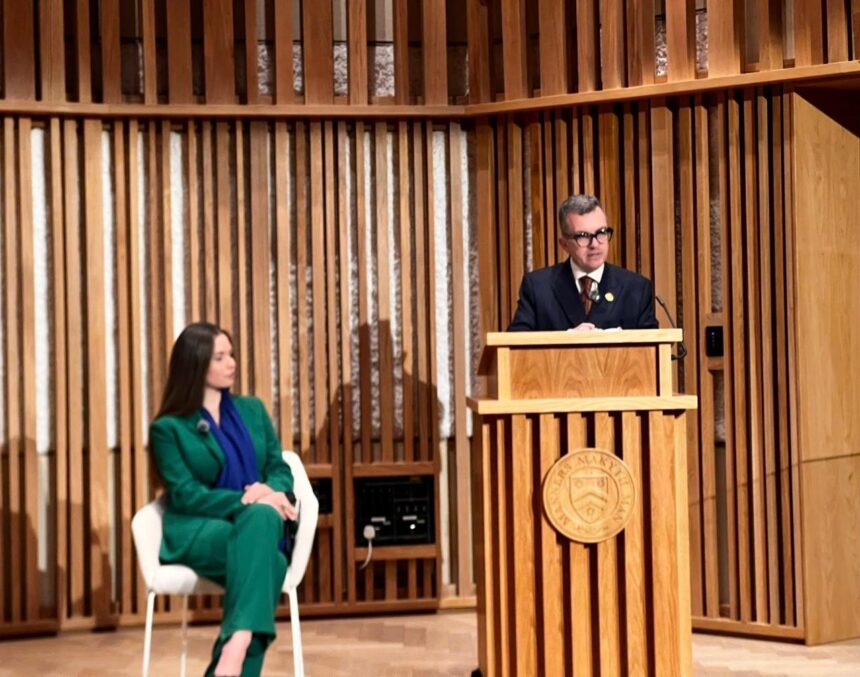
Minister of Planning and Economic Development Ahmed Rostom has participated in a discussion organised by the Society for Middle Eastern Studies (SOMES) at New College, University of Oxford, as part of his official visit to the United Kingdom.
He also met Leslie Maasdorp, CEO of British International Investment (BII), to discuss ways to strengthen cooperation and expand the institution’s investments in Egypt.
During the Oxford discussion, Rostom stressed that Egypt had successfully moved from economic stabilisation towards comprehensive economic transformation, highlighting the recovery of the Egyptian economy, which recorded growth of 5.1% in FY2025/2026, compared with approximately 4.4% in the previous fiscal year.
The minister highlighted the improvement in the quality of economic growth, with non-petroleum manufacturing recording 9% growth, making it the leading contributor to economic expansion.
Manufacturing, trade and communications collectively accounted for around 48% of total growth, reflecting the strengthening performance of the real economy.
Rostom also outlined the National Economic Transformation Programme 2027-2030, which is built around three main pillars and focuses on five priority sectors: agriculture, manufacturing, information and communications technology, tourism, and energy.
He explained that these sectors currently account for around 40% of GDP and 50% of real economic growth, while providing 40% of total employment.
Addressing entrepreneurship, Rostom said the government’s role was to reduce the cost of establishing businesses and facilitate their expansion rather than compete with them.
He noted that in emerging economies, the state should lead investment in areas that markets have yet to reach, while establishing the legislative and regulatory frameworks needed to enable the private sector to take the lead in other sectors.
He stressed that the next phase would focus on creating greater opportunities for private capital to build on the progress achieved so far.
On local development, Rostom highlighted efforts to develop Egypt’s governorates, particularly through the presidential Decent Life (Haya Karima) initiative, which aims to develop more than 4,500 villages and improve the quality of life of over 60 million citizens, representing more than half of Egypt’s population.
Concluding his remarks at Oxford, the minister emphasised that economic stability is a starting point rather than an end in itself, describing the private sector and young people as the main drivers of economic growth.
He called on the University of Oxford to strengthen research cooperation with the ministry to monitor and evaluate progress towards achieving the objectives of the National Economic Transformation Programme.
During his meeting with Maasdorp, Rostom expressed Egypt’s appreciation for its longstanding partnership with BII and its aspiration to deepen cooperation, align strategic priorities and explore new investment opportunities in sectors identified as priorities for the national economy.
The minister reviewed the Infrastructure Financing Guarantee Facility (IFGF), which is being developed in partnership with the World Bank Group.
The mechanism aims to mitigate investment risks, attract private capital and provide long-term local-currency financing for priority infrastructure projects.
Rostom stressed that implementing the mechanism in Egypt would represent a first step towards expanding the use of innovative financial instruments to reduce the risks associated with financing development projects.
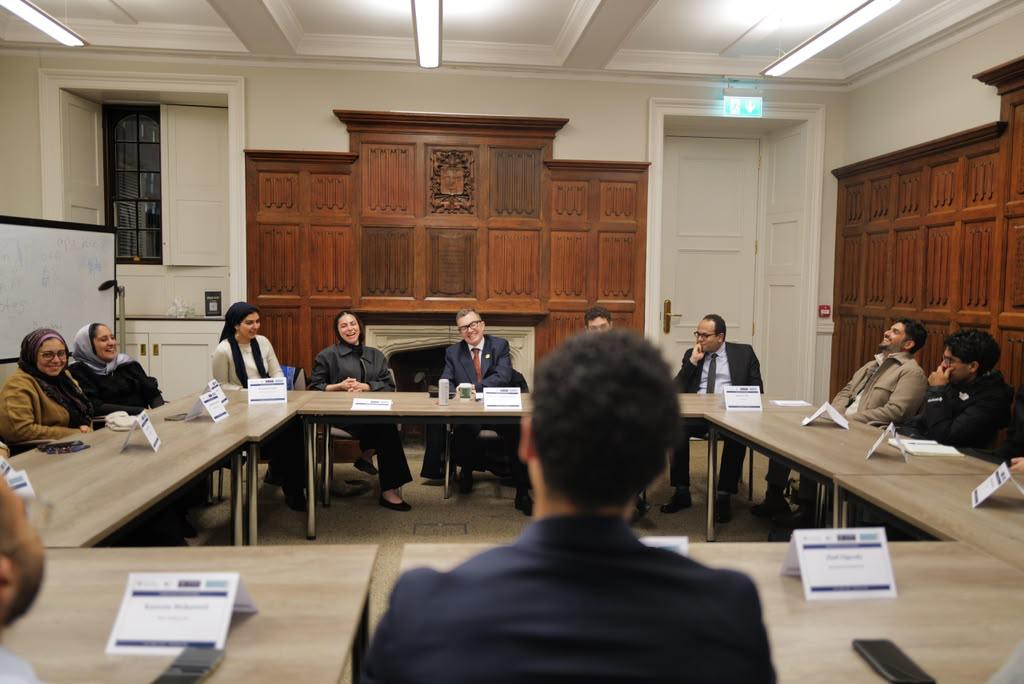
The minister also met members of the Egyptian Students’ Society at Oxford, with more than 20 students from various disciplines, including medicine, biomedical engineering, electrical engineering and finance, attending the meeting.
Students from several Arab countries, including Libya and Saudi Arabia, also took part.
During the meeting, Rostom outlined Egypt’s vision for economic development and youth empowerment, highlighting the government’s commitment to engaging with talented Egyptians living abroad.
He also discussed government efforts to stimulate entrepreneurship through the ministerial committee established under the chairmanship of the Deputy Prime Minister for Economic Affairs.
Rostom encouraged students working on entrepreneurial projects to contact the relevant ministers to seek support and assistance in advancing their initiatives.