

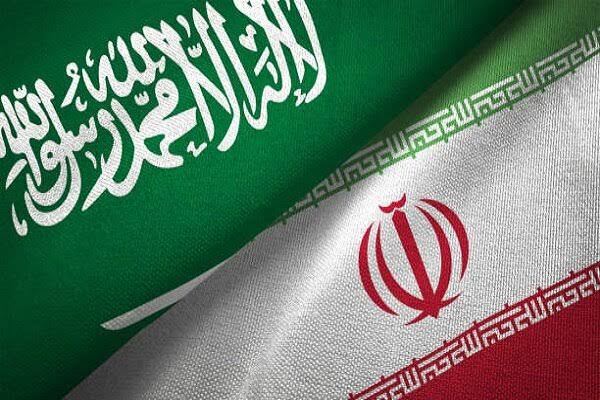
In international politics, alliances may shift and positions may be recalibrated, but geography remains a constant reality, imposing its own harsh conditions on neighbouring states. The relationship between Saudi Arabia and Iran represents one of the most complex examples of this enduring geopolitical rivalry. The friction between the two regional powers is not merely a temporary crisis driven by contemporary calculations of influence. Rather, it is rooted in historical legacies and profound ideological differences that have made efforts to build mutual trust an exceptionally difficult undertaking.
The roots of this divide lie in national and geographical factors before assuming a distinctly religious character. Arab-Persian competition for influence in the Gulf and the wider Middle East is a historical legacy that the advent of Islam did not erase. Instead, it re-emerged in different forms, preserving the distinct civilisational identities of both sides. With the 1979 Iranian Revolution and Tehran’s adoption of the doctrine of Velayat-e Faqih (Guardianship of the Islamic Jurist), alongside its principle of exporting the revolution, this rivalry evolved into a direct ideological and sectarian confrontation. Iran’s regional project came into conflict with Saudi Arabia’s position as a leading power in the Sunni Muslim world, reinforced by its religious standing as the custodian of Islam’s two holiest mosques.
This fundamental contradiction has shaped the way each country defines its national security, undermining attempts at rapprochement based on the mutual interests of neighbouring states. While Iran links regional security to the withdrawal of foreign powers and relies on a network of non-state actors to expand its influence, Riyadh views Iranian expansion and the arming of affiliated groups in Yemen, Iraq, Syria and Lebanon as a direct threat to its security. This has prompted Saudi Arabia to strengthen its international partnerships in pursuit of a regional balance of power.
In an attempt to break this deadlock, Riyadh moved in March 2023 to reach a reconciliation agreement with Tehran under Chinese mediation. The move was driven by Saudi Arabia’s recognition that its reliance on the American security umbrella could no longer be taken for granted, and that reducing regional flashpoints had become an urgent necessity. Yet the real problem was never the absence of diplomatic agreements, but rather the lack of trust in intentions and uncertainty over Tehran’s ability to restrain its regional allies and affiliated armed groups.

Herein lies the central paradox: de-escalation understandings did not prevent continued attacks by the Houthis on vital Saudi infrastructure and logistical facilities. The Kingdom thus found itself facing a severe geographical dilemma: maritime traffic through the Strait of Hormuz to its east was disrupted by the war involving Iran; oil pumping stations came under attack from Iraqi factions; and the Houthis threatened export routes through the Red Sea to the west. As a result, the alternative strategic routes that Riyadh had spent years developing to diversify its export channels became vulnerable to attacks involving relatively inexpensive drones.
This reality places Saudi Arabia’s Vision 2030 project before a fundamental challenge. At its core, the vision seeks to position the Kingdom as an oasis of stability and security, capable of attracting global investment and tourism in the heart of a turbulent region. Under the dynamics of asymmetric warfare, the Houthis are not necessarily seeking a conventional military victory. Instead, their strategy can revolve around prolonging attrition and sustaining an environment of persistent insecurity. This drives up shipping and insurance costs and disrupts supply chains, potentially inflicting losses worth billions of dollars on the Saudi economy at a fraction of the cost of the attacks themselves.
In the wake of the events of 7 October 2023, the war involving Iran and the subsequent escalation, marked by near-daily attacks on strategic targets within the Kingdom, the security doctrine pursued by Crown Prince Mohammed bin Salman has come under intense scrutiny. The attacks have exposed vulnerabilities in air defence systems and highlighted the limitations of emerging security frameworks, including the so-called Mecca Alliance. Riyadh is not necessarily seeking direct ground intervention by allies such as Türkiye and Pakistan. Rather, it faces a primarily technological and military challenge: protecting its airspace against missiles and drones. Even when such projectiles do not cause extensive physical damage, their ability to penetrate defensive systems can undermine the international image of the new Saudi Arabia, which rests on the promise of security, stability and business confidence.
The restoration of diplomatic relations through international mediation, despite its importance in reducing tensions, remains insufficient to eliminate the historical and ideological roots of the conflict. This makes it necessary to explore a new framework for managing relations between the two neighbouring states.
Moving from confrontation towards peaceful coexistence requires a comprehensive approach that goes beyond narrow security solutions. It must begin with the recognition that war is not inevitable and that deeper economic and commercial interdependence can serve as a genuine safeguard by raising the costs of conflict and making peace a more rewarding option for both sides. Such an approach must also address historical hostility as an intellectual construct that can be reconsidered and transformed. This would require reviewing competing historical narratives and moderating media and educational discourse, alongside an honest willingness to acknowledge past mistakes and establish a shared understanding of the region’s common history.
Ultimately, amid an entrenched crisis of confidence, Riyadh continues to view Iranian conduct as an expansionist project that tactical agreements alone cannot restrain, while Tehran remains concerned about attempts to contain its regional influence. The realities on the ground therefore raise a fundamental question that captures the broader dilemma facing the region: What is the value of vast military arsenals and major political alliances if relatively inexpensive weapons can penetrate deterrence systems and impose economic and security costs that far exceed the price of launching them?
Professor Hatem Sadek, Helwan University