

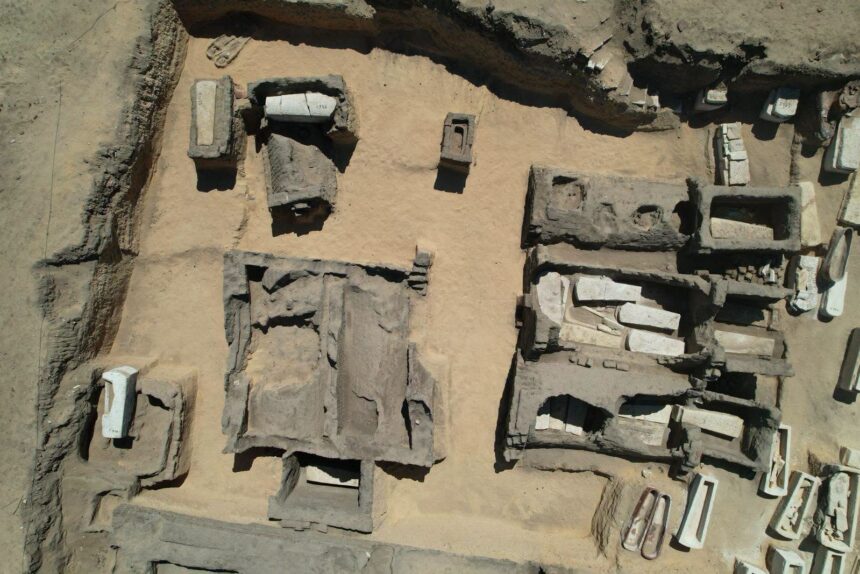
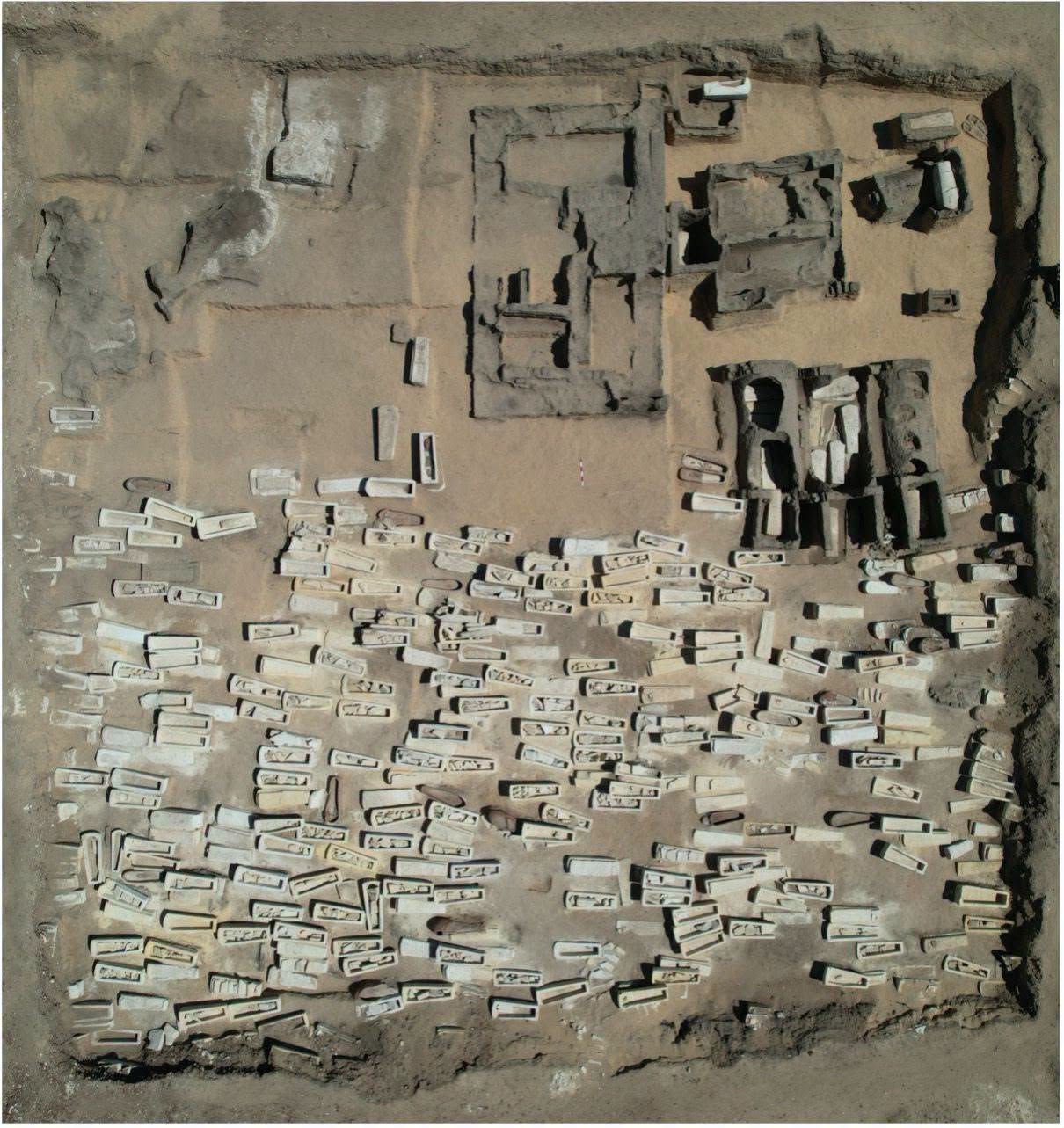
An Egyptian archaeological mission from the Supreme Council of Antiquities has uncovered a cemetery containing hundreds of stone and pottery coffins at the Kom Abu Billo archaeological site in Menoufia governorate.
The cemetery includes stone and pottery coffins, remains of wooden coffins, domed mudbrick tombs and a tomb lined inside with limestone.
Hisham El-Leithy, secretary-general of the Supreme Council of Antiquities, said it was the first discovery at the site of so many burials and coffins in an open burial courtyard, with architectural features still extending beneath the sand and debris. Preliminary study of the grave goods suggests the cemetery was used mainly by members of the middle class, he said.
Minister of Tourism and Antiquities Sherif Fathy said the variety of burial types, coffins and artefacts reflected the site’s historical importance.
Dating and setting
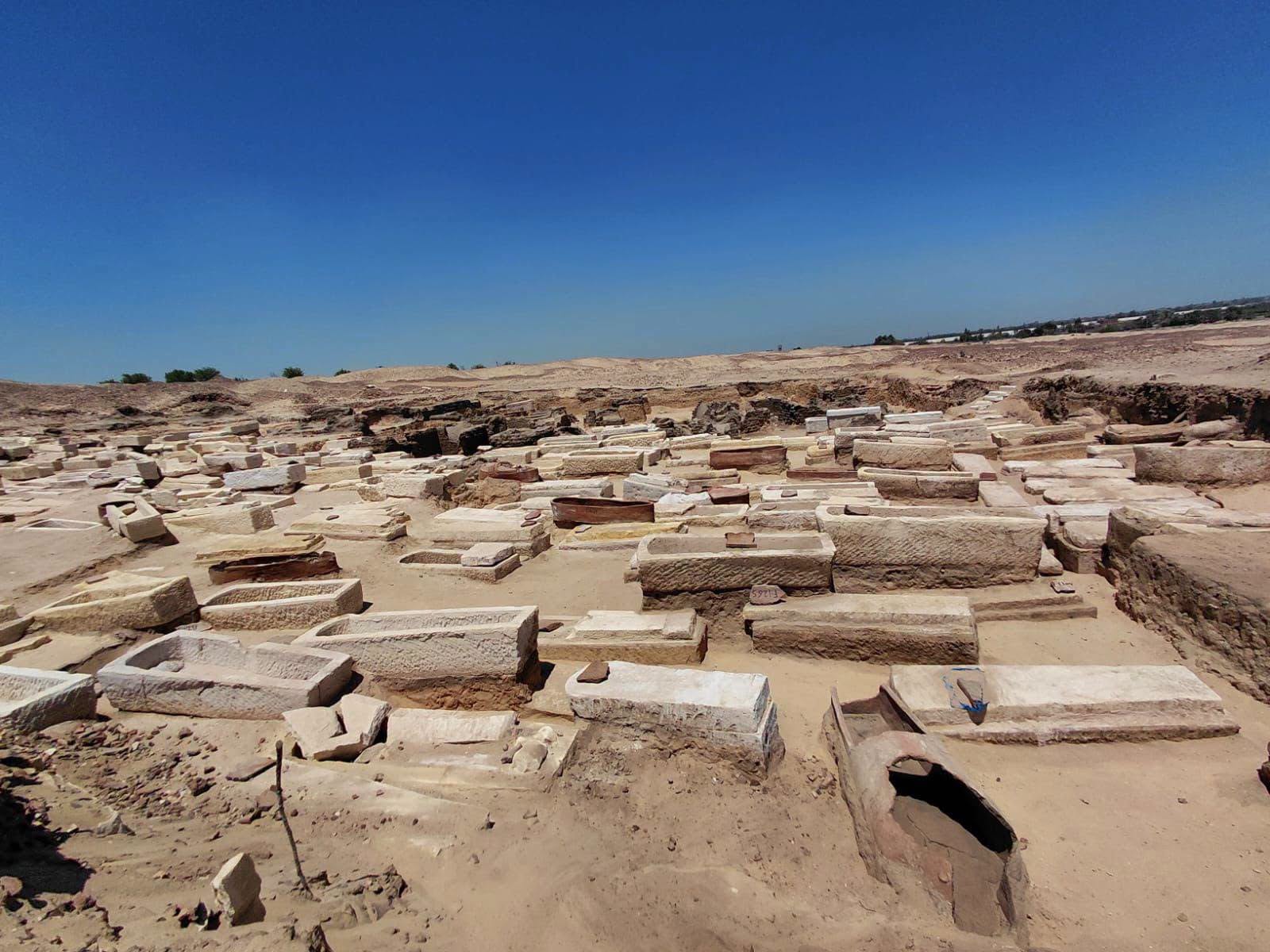
Mohamed Abdel Badie, head of the Egyptian Antiquities Sector, said initial studies dated the cemetery to the early Ptolemaic period, in the third and second centuries BC, with some burials from the end of the Late Period. The dating draws on stratigraphy, pottery, coffin styles, burial customs and tomb architecture.
The cemetery lies within the area of the ancient city of Terenouthis, at the eastern entrance to Wadi El Natrun, which was known for the natron salt used in mummification. Earlier work at the site uncovered the remains of the city and a temple dedicated to the goddess Hathor as “Lady of Turquoise”.
The burials reflect funerary practices tied to ancient Egyptian deities including Renenutet, Osiris, Isis and Hathor, whose worship was associated with the area at different times, Abdel Badie said.
What was found
Mostafa Rizk, director general of Menoufia antiquities, said excavators found a surface layer of hundreds of stone coffins, some without lids and others completely broken by earlier looting and quarrying.
Remains of pottery coffins were also found, some with stylised human features and others fully anthropoid. The human remains inside were badly preserved, but showed traces of embalming materials and resins, along with layers of cartonnage and plaster painted in yellow, red, blue and gold.
Other finds include gold tongues, an earring, a gold necklace pendant and gold sheets, scarabs in schist and lapis lazuli, wedjat eyes, small amulets and a large number of faience ushabti figurines, some inscribed in hieroglyphs.
The team also found offering tables, small limestone heads, sphinx figurines, fragments of stone statues of the falcon god Horus and two falcon burials. Several terracotta figures depict Isis-Aphrodite, including part of a vessel lid showing her seated on a lotus flower nursing the infant Harpocrates.
Excavation, study and documentation at the site will continue.


