

Thousands of years ago, when much of the Sahara was greener and wetter than it is today, the Nile was not the only force shaping human movement across northeastern Africa. Cattle also played a significant role, influencing how people moved between water sources, grazing lands, and settlements.
A recent study published in the Proceedings of the National Academy of Sciences (PNAS) has traced the movements of humans and cattle across the Middle Nile Valley, in what is now Sudan and neighbouring regions, over approximately 10,000 years. The researchers found that mobility patterns changed repeatedly as the climate shifted from the Green Sahara to today’s much drier environment. Throughout much of this period, however, cattle remained central to economic activity, social status, and trade networks.
Marta Osypińska, a professor of African archaeology at the Institute of Archaeology at the University of Wrocław in Poland and the study’s lead author, says mobility played a crucial role in the emergence of food-producing societies in northeastern Africa. From an early stage, the relationship between humans and cattle extended far beyond the production of meat and milk. The animals also became symbols of social status and important elements of economic and religious life.
Teeth preserve clues to childhood origins
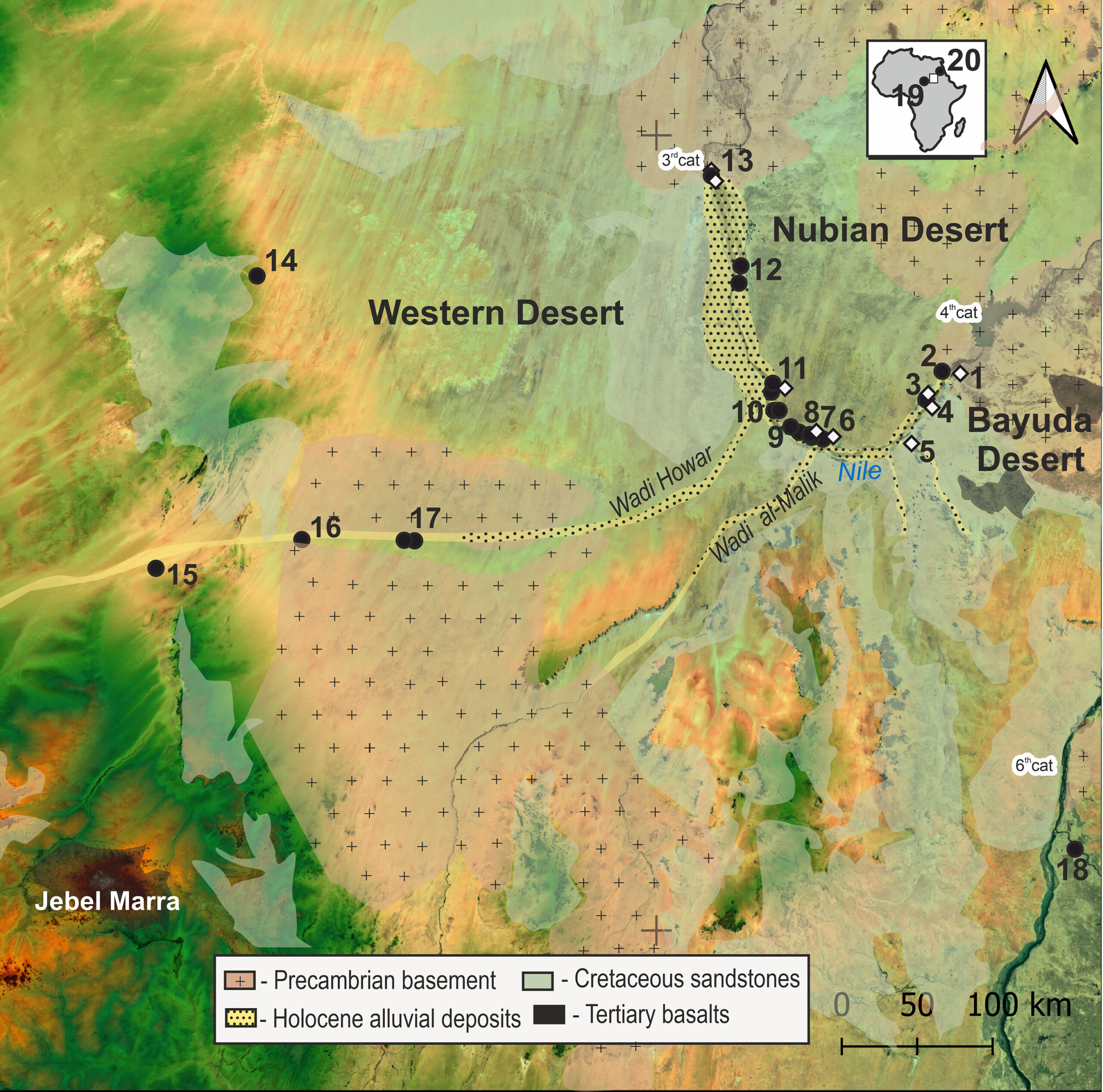
The research team combined new findings with previously published data from 33 archaeological sites spanning the Middle Nile Valley, Wadi Howar, the Eastern Desert, and Chad. The sites cover periods ranging from the Neolithic to the Middle Ages and early modern era.
According to Osypińska, the researchers analysed tooth enamel from humans and cattle because it preserves distinctive ratios of strontium isotopes, a chemical element found in local rocks, water, and food. As teeth develop, they absorb these chemical signatures, which remain preserved long after death.
“By comparing the chemical fingerprint preserved in a tooth with the geological signatures of different regions, we can determine whether a person or animal grew up on the Nile floodplain or in the surrounding uplands and deserts, even if they died and were buried somewhere else,” Osypińska explains.
The findings reveal that the story began in an environment very different from present-day Sudan. Around 10,000 years ago, the Sahara experienced a humid period marked by increased rainfall and the expansion of grasslands, lakes, and wetlands, creating extensive grazing areas beyond the Nile’s banks.
Tooth enamel signatures dating from approximately 8000 to 5000 BCE suggest that human and cattle mobility patterns were closely interconnected. Their movements were not confined to the river’s floodplain but extended into the surrounding uplands. The researchers say these findings are consistent with the emergence of early pastoralism, when communities moved between different ecological zones in response to seasonal changes and the availability of water and pasture.
As aridification intensified during the fifth and fourth millennia BCE, grazing lands and surface water resources began to shrink. Rather than bringing mobility to a halt, however, these environmental changes appear to have made movement more organised and increasingly dependent on established corridors.
The data suggest that Wadi Howar, now an extremely arid part of the Sahara, likely served as one of the corridors connecting the Nile Valley with the Western Desert. Herd movements appear to have followed seasonal patterns between the river and neighbouring uplands, possibly extending deep into the Eastern Sahara.
At the same time, human communities along the Nile became increasingly settled. This suggests that cattle may have travelled greater distances than their owners, either accompanied by specialised herders or through exchange networks linking different communities.
Nile kingdoms relied on cattle from beyond the valley
With the rise of the Kingdom of Kerma, which extended along the Nile from the First Cataract in the north to the Fourth Cataract in the south between approximately 2500 and 1550 BCE, mobility patterns changed again.
Strontium isotope signatures from cattle teeth indicate that the kingdom relied on both locally raised herds and animals brought in from beyond the Nile floodplain, while many human inhabitants remained more closely tied to the river.
The findings suggest that Kerma’s economy depended on extensive supply networks bringing livestock from different regions, rather than relying exclusively on local herds.
This pattern continued during the Kushite periods, when cattle meat became associated with social status. The researchers suggest that imported animals may have moved through supply networks controlled by political authorities and elite groups.
However, continued desertification gradually reshaped these networks. From the first millennium BCE onward, routes extending from the Western Desert declined in importance as ancient lakes dried up. Cattle movements instead shifted southward towards Kordofan and the central Sahel, possibly following corridors such as Wadi el-Malik.
These networks persisted through the Kushite periods and into the era of the Christian kingdoms of Nubia. Some cattle recovered from medieval Banganarti carry chemical signatures suggesting distant origins, possibly around Jebel Marra or in areas between the Fourth and Fifth Nile Cataracts.
By the 16th and 17th centuries, the system had changed once again in Dongola. Cattle husbandry had become more localised within the Nile Valley, while humans themselves displayed greater mobility than the herds.
However, the findings do not mean that researchers can reconstruct the exact route taken by every person or cow. Strontium isotope signatures can distinguish between broad geological regions, but they cannot pinpoint a particular village or individual journey. Similarly, matching isotope signatures in humans and cattle do not necessarily prove that they travelled together or did so at the same time.
The study also has limitations arising from gaps in the archaeological record. Data from the fourth millennium BCE, for example, were insufficient to support a robust reconstruction of mobility patterns during that period. The relatively small number of cattle samples from certain periods also makes it difficult to draw definitive conclusions about variations in animal size and geographical origins.