

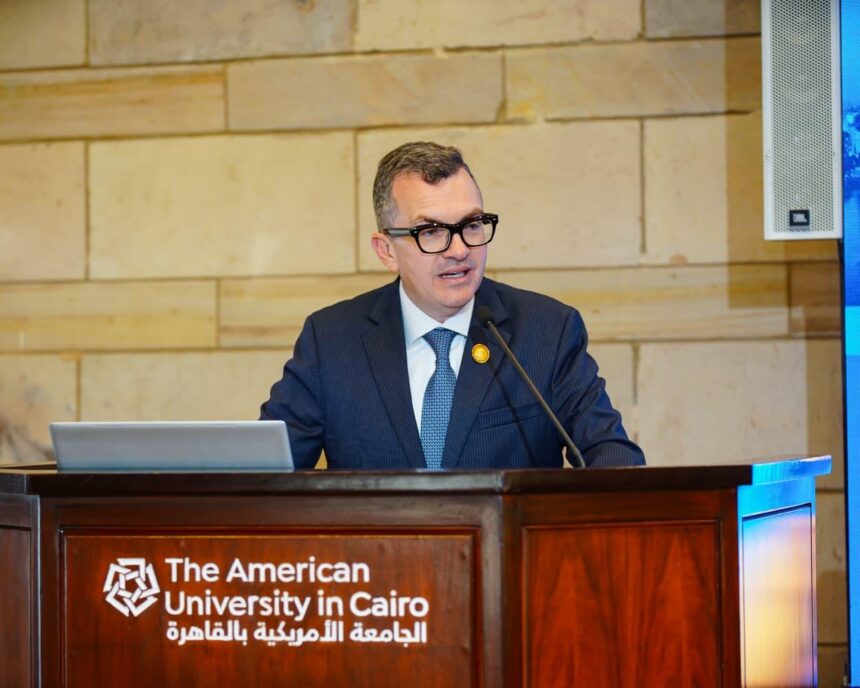
Minister of Planning and Economic Development Ahmed Rostom said the government is implementing the National Economic Transformation Programme, which aims to stimulate five key productive sectors critical to economic growth and employment: manufacturing, agriculture, communications and information technology, tourism, and energy.
Rostom explained that these sectors collectively account for around 40% of total employment, 50% of real economic growth, and 40% of gross domestic product (GDP).
He added that the programme seeks to improve the quality of economic growth and diversify its sources, thereby strengthening the economy’s resilience and sustainability amid interconnected challenges. It also targets creating 3 million new jobs over its implementation period.
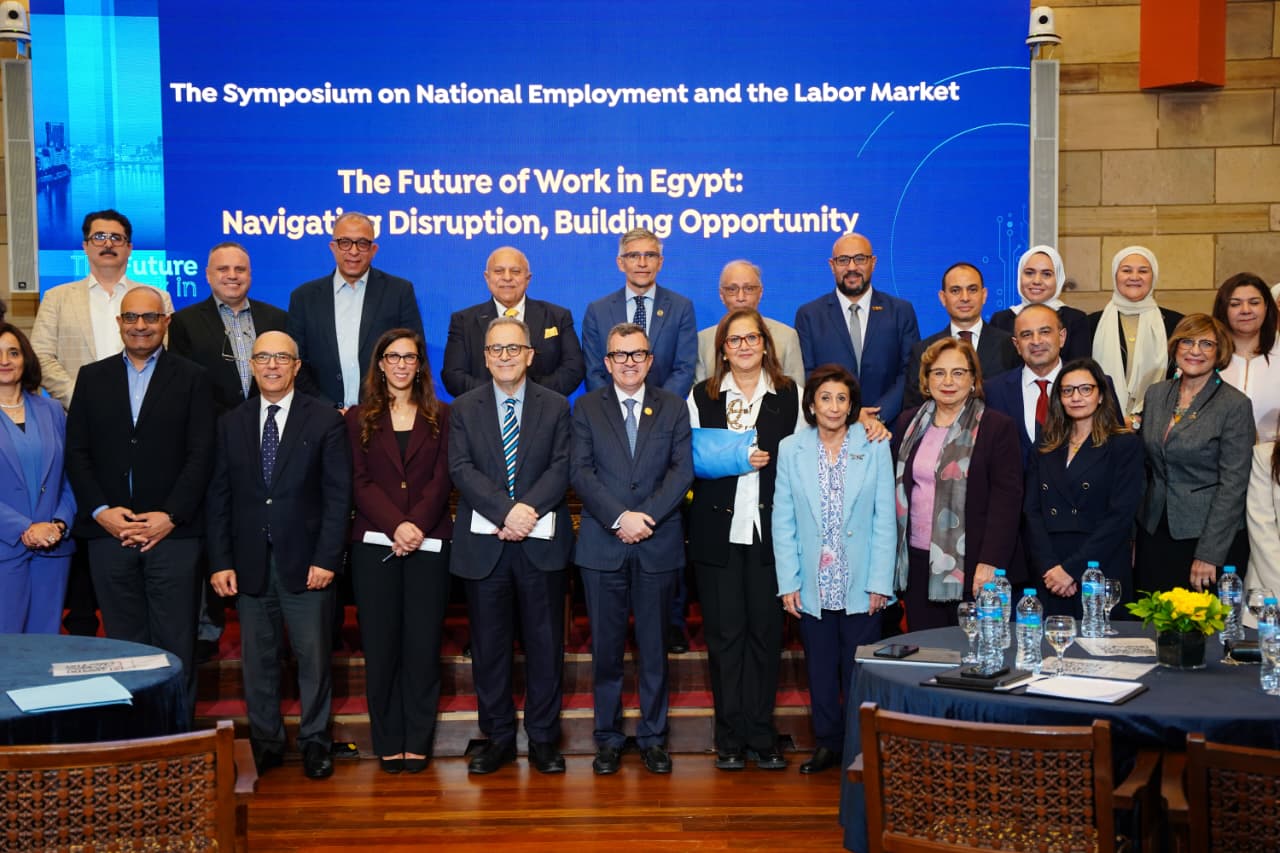
His remarks came during the National Forum on Employment and the Labour Market, organised by the American University in Cairo (AUC), in the presence of Presidential Adviser for Economic Affairs Hala El-Said, AUC President Ahmad Dallal, and a number of specialists, academics, and stakeholders concerned with labour market issues.
At the outset of his address, Rostom stressed that employment and labour market development are among the primary objectives of economic development, given their direct impact on improving citizens’ quality of life and raising income levels.
He also highlighted the growing global challenges facing employment, noting that international studies project that 1.2 billion young people will reach working age over the next 15 years, while the global economy is expected to generate only 400 million jobs.
Domestically, Rostom said the Egyptian labour market needs to create approximately 1.3 million jobs annually to keep pace with the rapid growth of the labour force.
The Planning Minister stressed that Egypt is working to empower the private sector to become the main driver of economic growth and job creation.
He explained that the private sector currently accounts for around 80% of GDP and 61% of total investment, while employing approximately 83% of the country’s workforce, equivalent to 27 million workers.
Rostom said the government aims to increase the private sector’s share of total investment to 67% by 2030.
This will be accompanied by directing public investment towards priority sectors and implementing the second edition of the State Ownership Policy Document to regulate the state’s economic presence and create greater opportunities for private sector investment.
Regarding economic performance indicators, Rostom revealed that Egypt’s unemployment rate stood at 6% at the end of the third quarter of 2026, following a slight increase of 0.2 percentage points, which he attributed to new cohorts of graduates entering the labour market.
He noted that the agriculture and fishing sectors accounted for the largest share of employment.
Rostom also stressed that the Egyptian economy continues to perform positively, recording growth of 4.9% in the first quarter of the current fiscal year, exceeding the forecasts of international institutions.
The Planning Minister also outlined the proposed framework for a national project to develop and modernise the labour market and skills, in coordination with Cairo University, the American University in Cairo, and the ministries of Planning and Economic Development, Labour, and Higher Education.
Discussions focused on strengthening coordination among the various stakeholders to improve educational outcomes and align them with labour market requirements, as well as enhancing cooperation with skills councils and the Supreme Council for Human Resources Skills Development.
Concluding his address, Rostom reaffirmed that coordinated efforts are underway to improve the quality of services and raise income levels. He also highlighted the Prime Minister’s decision last week to establish the Supreme Council for Human Resources Skills Development.
He explained that the council will be responsible for formulating general training and qualification policies and developing plans to align educational outcomes with current labour market requirements and the jobs of the future.
Rostom stressed that current circumstances require concerted efforts by all national stakeholders, guided by a comprehensive vision to develop graduates’ skills in line with rapid changes and ongoing technological advances.


