

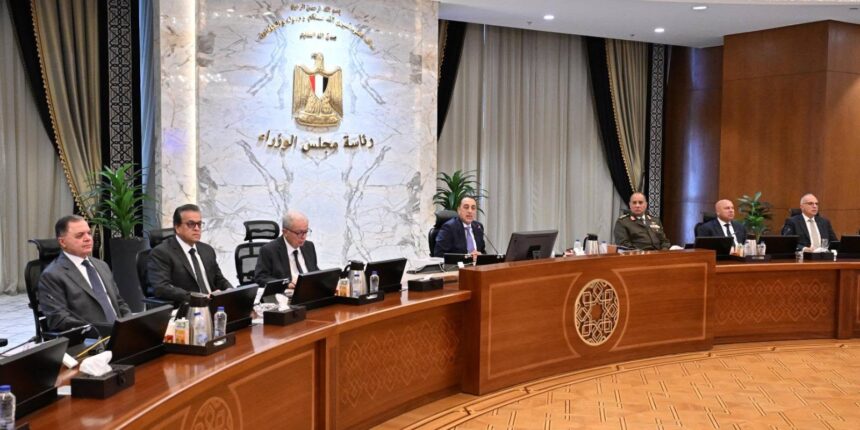
Egypt is working to localise major industries that have traditionally relied heavily on imports as part of efforts to strengthen domestic manufacturing and reduce the country’s import bill, Prime Minister Mostafa Madbouly said on Wednesday.
Speaking at the weekly Cabinet meeting at the government headquarters in the New Administrative Capital, Madbouly reaffirmed the state’s commitment to supporting serious investors, particularly those making direct investments and manufacturing high-quality products that meet the needs of the Egyptian market.
He made the remarks following the inauguration of the second phase of Haier Egypt’s eco-friendly industrial complex in 10th of Ramadan City on Tuesday, describing the expansion as an important step towards establishing domestic manufacturing capabilities in sectors where Egypt has traditionally depended on imported products.
With the completion of its first and second phases, the Haier complex now includes production lines for televisions, washing machines, household air conditioners, low-pressure central air-conditioning systems, refrigerators and freezers, in addition to a factory for supporting and complementary industries.
Madbouly said the government’s support for serious investors aims to encourage direct investment, supply the local market with high-quality products and reduce reliance on imports.
The prime minister also reviewed President Abdel Fattah Al-Sisi’s participation in a high-level strategic dialogue during the World Economic Forum’s Egypt Strategic Meeting in Cairo, which brought together executives from major international companies and representatives of multilateral development finance institutions.
Madbouly said the president had highlighted the importance of international cooperation amid escalating geopolitical tensions, economic challenges and ongoing changes in global production, energy and supply-chain networks.
Al-Sisi also stressed that Egypt’s political and economic stability, industrial and economic zones, investment incentives and Golden Licence scheme provide a favourable environment for attracting investment across various sectors, according to Madbouly.
The president further highlighted the strategic importance of the Suez Canal, through which around 12% of global trade passes, as well as Egypt’s expanded port network and its links to logistics corridors.
Madbouly noted that the president’s remarks at the forum outlined the progress achieved under Egypt’s economic reform programme, implemented in cooperation with international institutions, including the International Monetary Fund (IMF).
The programme has contributed to improving macroeconomic indicators, while reforms have also targeted the legislative and tax systems, the integration of the informal economy, investment incentives and digital transformation.
He also referred to Al-Sisi’s meeting with the World Economic Forum’s chief executive on the sidelines of the event, during which both sides discussed strengthening cooperation on regional and global economic developments, sustainable development, technology and innovation.
The prime minister said the forum’s leadership had praised Egypt’s economic and fiscal reform efforts and expressed interest in deepening coordination with the government on international and regional economic issues.


